Articles Posted in Mesothelioma in New England

Firefighters in Boston put their lives on the line every day and night to help keep others safe. They face a lot of risks on the job, including burns from raging fires, smoke inhalation, falling debris, roadside dangers when rescuing car accident victims and a various other job-related hazards. When they signed up for the job and entered the academy, they knew the risk they would be facing.

But one risk they should not have to fear is asbestos exposure in their own firehouses.
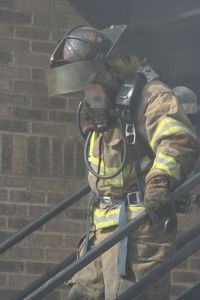
firefighter-711365-m.jpgAccording to a recent news article from The Boston Globe, Boston Fire Commissioner, Joseph E. Finn, has discussed the awful state of disrepair into which Boston’s fire stations have fallen. He is now happy to be able allocate $26 million of the department’s budget to replace two of the worst fire stations and modernize others.

This is one piece of a larger plan to get one of the country’s oldest departments a much needed update.

While these two stations slated for demolition and replacement are in the worst state of disrepair, the city’s 31 other fire stations are not exactly in great shape either. This is a result of years of neglect and various piecemeal attempts to patch up problems in the past. It is important to keep in mind that firefighters do not only have to work in these stations, but also have to live in them for at least part of every week.
Continue reading

Many old and historic buildings in Boston and across the Commonwealth of Massachusetts were built during an era in which asbestos was heavily used during construction. According to a recent article from WAMA, a new large-scale redevelopment project is now in the works in Ludlow, Massachusetts.

tower-in-the-sky-1148256-m.jpgThe project site is situated along a mile and half river walk and is part of the historically designated Ludlow Mills. The mill has not been in operation for many years and has been fenced off from people for over 160 years. The site is on approximately 170 acres and contains more than 60 buildings.

While this project was in planning stages for many years, the main problem was finding funding and gaining approval to complete a large scale asbestos abatement (removal) project necessary before construction and renovations could begin. Asbestos abatement became possible with state and federal funding, which cost millions of dollars to complete. Asbestos abatement was completed over a five-year period.
Continue reading

According to a recent news report from the Valley Patriot, the Massachusetts Department of Environmental Protection (MassDEP) fined two asbestos abatement contractors. The fines were over $46,000 each for violations discovered during a routine inspection. Both violations occurred at the same commercial site at which both asbestos removal companies had been hired to perform work. The site was located in Burlington, Massachusetts.

no-entry-graffiti-art-1435986-m.jpgMassDEP discovered violations during an inspection in December 2014. Specifically, inspectors found 150 feet of pipe insulation made of asbestos-laden material had been placed in bags that did not have airtight seals, as required by state and federal law. The asbestos pipe insulation was also removed dry, despite a requirement all material be wet prior to removal.
Continue reading

Asbestos has been used heavily during much of the last century in almost all aspects of production and construction. While many factory jobs and construction jobs involve working directly with asbestos, there are some jobs thought to be relatively safe from asbestos exposure. One of these safer construction jobs is sheet metal work.

hole-on-the-wall-1382106-m.jpgSheet metal workers typically handle projects working only with the metal and not coming in direct contact with asbestos-containing material like wall insulation or pipe insulation, some of the most likely sources of material emitting deadly asbestos fibers.

Unfortunately, many of these workers have been exposed to asbestos indirectly, and, while indirect exposure might seem safer, a recent study published in the

With the unscheduled closing of Boston’s Long Island Homeless Shelter, city officials have been scrambling find a new location to house hundreds of displaced homeless residents and many drug rehabilitation patients.

renovationtime.jpgThe shelter was closed when the bridge connecting Long Island to Quincy became so deteriorated city engineers urged it immediately be closed to prevent a deadly accident. The worst damage requiring the bridge to close was found on the underwater support structures during an extended inspection. With the island effectively cut off from the mainland, there was no way to keep the shelter open, and city officials were forced to close it with little advanced warning or preparation.

The city hopes a new shelter under renovation and remodeling will serve as permanent housing for the over 700 former residents at Long Island. This new shelter is being constructed at what was once a plant where transportation department workers conducted equipment repair and made street and road signs. This plant is filled with asbestos used during its construction. Much of this asbestos was already crumbling down as a result of years of deterioration and insufficient upkeep.
Continue reading

Residents of Martha’s Vineyard, a town on the Cape south of Boston, have been eagerly awaiting the opening of the library budgeted to cost a quarter of a million dollars at the time bids were awarded. The problem now facing contractors is it is now estimated to cost nearly half a million dollars to complete the project, due to unforeseen delays including discovery of asbestos on the job site, according to a recent news article from MV Times.

law books.jpgWhen contractors had their bid approved and began work, the project was quickly halted when water begin filling the excavation site for the library foundation. The water was coming up from the water table below, and, for some reason, this was not anticipated at the time plans were approved. It cost builders and engineers over $100,000 to fix water table issues before construction could be resumed.

Once the water table issue had been resolved, contractors unearthed an underground storage tank, which had to be painstakingly removed and the resulting vacant hole filled in with suitable material. At this point, there were problems with the fence erected around the project. After tackling these new issues, and at very great expense, contractors then found pipes believed to be insulated with now friable asbestos material.
Continue reading

According to a recent news article from Wicked Local Woburn, city council officials have finally granted approval on a permit request to remove asbestos after much speculation they would not agree to allow the project to move forward.

1327707_old_water_valve.jpgThe reason this permit request faced strong initial opposition was because an asbestos abatement company wanted permission to store asbestos debris at its headquarters within city limits. It was not until petitioners withdrew this specific request that city council members gave the stamp of approval.

Council members were concerned about storing highly dangerous asbestos debris in an area designated as a flood plain. This was after being allowed to put their new headquarters within the limits of a city, which has already spent over $5 million in taxpayer dollars to treat contaminated water.
Continue reading

Everywhere you look, there are new real estate development projects going up across the Commonwealth of Massachusetts. A lot of the new development started in Boston and the surrounding suburbs but now has spread to other areas, such as Springfield.

asbestos-244234-m.jpgOne of the major impediments to all this new development is, in order to make way for new buildings, old asbestos-laden buildings must be razed. When a development wants to demolish an old building, it must first have an inspection performed to see if the building contains asbestos, and many of them do.
Continue reading

Throughout the Commonwealth of Massachusetts, cities and towns are faced with problems related to unsafe long-abandoned buildings than need to be demolished but can’t be, due to the presence of highly-toxic asbestos.

vintage-hotel-1380443-m.jpgAccording to a recent news article from WGCB, officials in Holyoke, Massachusetts are faced with this very problem with respect to the Essex House. The Essex house was built in 1880, and was among Paper City’s largest and most luxurious hotels. Now it is a crumbling, dangerous shell of its former glory, and the town wants it gone.
Continue reading

Around this time of year, it is almost impossible to log onto Facebook without seeing pictures of your friend’s Christmas trees and other holiday decorations. While many have boxes full of treasured ornaments that have been in the family for decades, the Telegraph warns that many of these antique ornaments may contain asbestos and may pose a serious health risk.

christmas-ornament-1373026-m.jpgAccording to the news article, many vintage ornaments could be laced with toxic material. In fact, in the 1940s, the fake snow dusted on many of these ornaments was commonly made from pure asbestos.

Unfortunately, there is no way to tell if the material contains asbestos without expensive materials testing at a laboratory. Since most people are not willing to send their ornaments to a laboratory for asbestos testing, in England authorities are recommending any vintage ornaments containing fake snow should be thrown away. This, of course, raises the issue of safe asbestos disposal, but given it the alternative, it seems better than having asbestos on your family Christmas tree.
Continue reading

Contact Information