Asbestos Exposure Blamed for Gun Shop Owner's Sickness

August 16, 2012

In some ways, a mesothelioma diagnosis can be worse than a gunshot wound.

For one thing, a bullet wound is quick. bullet.jpg

You are able to tell right away exactly where it is and what it is. Plus, being shot isn't necessarily a death sentence.

Our Boston mesothelioma attorneys know that mesothelioma is the opposite of all these things, as one California gun shop owner is learning.

According to a report in the Tracy Press, the businessman began getting sick several years ago. He was experiencing a tightness in his chest and breathing problems. He suspected it might be mold in his older office building.

But when inspectors were called to look, they weren't able to find anything.

It wasn't until later that he determined that asbestos was present in the building. That in and of itself might not have been enough to cause alarm, but it was determined to have been airborne - the element that makes the compound deadly.

The shop owner later said he suspected that the substance may have been kicked up during a burglary a decade ago. That's when a pair of thieves reportedly sliced into the roof and ceiling - and through the asbestos-laden ceiling tiles - to get to the guns.

It was later determined that the building's wallboard and joint taping compound also contained asbestos.

Doctors told him that this was likely the cause of his "mysterious" illness, and he needed to vacate the premises immediately.

Asbestos was used in a large number of manufacturing products up through the 1970s. It was particularly favored for insulation and other building materials because of its flame-retardant properties.

However, the companies that manufactured these products knew more often than not that the asbestos was harmful, both to workers and potentially consumers.

It's common to find asbestos in older homes or structures. It's not necessarily inherently dangerous in and of itself. The problem is when those particles are disturbed and become airborne. That can happen either during renovations, or demolitions - or burglars cutting through the roof.

The entrepreneur closed shop immediately after doctors discovered abnormalities in his lungs, though it has yet to be determined whether the ailments are mesothelioma. If in fact it is mesothelioma caused by exposure to asbestos from that burglary, it could be years before he gets a definitive diagnosis. That's because mesothelioma is a disease that takes years to develop following the initial exposure - although it's not surprising this individual is already experiencing symptoms, 10 years later.

In this case, it appears the repairs weren't properly made as to contain the asbestos dust.

In a situation like this, one may be able to hold the landlord or his contractor liable for the exposure, particularly if they knew or should have known asbestos was present in the building and failed to address that issue during the course of repairs following the burglary.

Catching the disease early is key to ensuring sufferers live the longest and highest quality lives possible. This individual may have been relatively lucky, in that it seems he discovered the cause of his illness within just 10 years. It often takes much longer than that for the disease to manifest and for doctors to issue a firm diagnosis.

Continue reading "Asbestos Exposure Blamed for Gun Shop Owner's Sickness" »

Asbestos Use Not Banned in U.S.; Motorcycle Ride Raises Awareness

August 15, 2012

There are 55 countries in the world that have banned the use of asbestos, the material proven to cause mesothelioma cancer.

The U.S. is not one of them. motorcycle.jpg

Our Boston mesothelioma lawyers understand that one man in Illinois had set out to change that. Sadly, he passed away late last year of the disease, at the age of 46. Now, as the Pekin Times reports, his wife is picking up his torch.

In an interview late last month, she was quoted as saying that the disease took his life, but it never stole his spirit or passion - or his desire to see asbestos barred from use in this country.

His wife is now hosting a memorial motorcycle ride in her husband's honor, to raise funds for mesothelioma research and also to promote awareness about the U.S. government's failure to enact a ban on asbestos.

In fact, asbestos was banned for a short time in certain products. Back in the 1970s, the U.S. Consumer Product Safety Commission had banned the use of asbestos in certain products, like wall patching compounds and textured paint. In July of 1989, the Department of Environmental Protection issued a final rule banning most products containing asbestos. It prohibited the manufacturing, importation, processing or commercial distribution of many asbestos-containing products. However, the regulation was overturned by the Fifth Circuit Court of Appeals in New Orleans in 1991.

According to the EPA, the products that are still banned include:


  • Rollboard;

  • Commercial paper;

  • Specialty paper;

  • Flooring felt;

  • Corrugated paper;

  • New uses of asbestos;

It's also banned for use in fireproofing and insulation and "decorative" purposes.

Still, there are numerous asbestos containing products that aren't banned in the U.S. Those include:

  • Asbestos-cement flat sheet;
  • Asbestos clothing;
  • Pipeline wrap;
  • Roofing felt;
  • Asbestos cement-shingle;
  • Millboard;
  • Automatic transmission components;
  • Vinyl-asbestos floor tile;
  • Disc brake pads;
  • Brake blocks;
  • Brake linings;
  • Non-roof coatings;
  • Roof coatings;
  • Gaskets;

What's more, the EPA doesn't track the manufacturing, processing or distribution of products that contain asbestos in the U.S. The agency instructs, "It would be prudent for a consumer or other buyer to inquire as to the presence of asbestos in particular products."

But consumers shouldn't have to ask whether the products they are purchasing contain a substance that could kill them.

And that's the point made by the widow in Illinois. Had asbestos been banned in this country during his life, he would probably still be alive today.

His widow believes that he most likely was exposed to asbestos while serving on a ship in the Navy.

All proceeds from the memorial ride are going to a scholarship fund in her husband's names, as well as the Asbestos Disease Awareness Organization and the Mesothelioma Research Foundation.

Continue reading "Asbestos Use Not Banned in U.S.; Motorcycle Ride Raises Awareness" »

Students Allege Asbestos in Dorms Made Them Sick

August 12, 2012

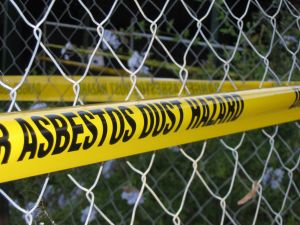
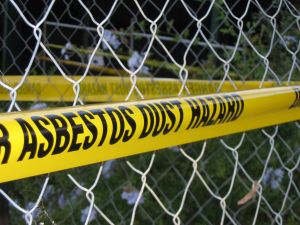
We recently wrote in our Boston Mesothelioma Lawyers Blog about universities in Boston that had been slapped with large fines as a result of improper removal of asbestos and other violations. asbestosonblue.jpg

Now, Texas State University has come under fire for asbestos found in one of its dorms.

University officials say they are working to remove the deadly material, and though they contend it never posed a risk to students, some who resided at the dorm in previous years say they were frequently sick during their time there.

Unfortunately, the students may not have much of a case if they try to take the university to court because scientific research conducted so far has indicated that asbestos fibers are dangerous when airborne. The simple presence of asbestos in a building - which is quite common in structures built prior to the 1980s - is not necessarily going to make you sick.

Usually, the problem is when asbestos is not properly removed, causing the fibers of the heat-resistant material to become airborne. Once they are inhaled in the lungs, they can create scarring and causing lung cancer, asbestosis and mesothelioma, which is a cancer that attacks the body's internal organs.

A person's chances of getting mesothelioma depend a great deal on how much exposure they endured, coupled with how long that exposure lasted. That's why most typically, mesothelioma patients are individuals who worked closely with asbestos-laden materials. For example, someone who worked in a Navy shipyard where the material was ever-present or as an auto mechanic with parts that were made with asbestos. Day in and day out, they were exposed.

The latency period for asbestos is 10 to 40 years, sometimes longer. That's how long it takes after exposure for the disease to manifest.

Still, the students' claims can't be entirely dismissed. One young woman who resided at the hall where asbestos removal work is now ongoing says that she immediately became ill once she moved in. She was diagnosed with bronchitis for the first time in her life, and was even prescribed an inhaler to cope with breathing problems. Once she moved into another residence off-campus, she told the student newspaper, her health problems disappeared.

School officials say they first began testing buildings on campus for the material, and having discovered a high quantity of it in several structures, it has been incrementally working to remove it. Mostly, they say it has been found in vinyl floor tile and sheet flooring in the buildings.

Given that these materials could have deteriorated over time, it's possible that some of the substance did become airborne, posing a serious risk to students who lived there. That much was even admitted by school officials.

Still, there have been no formal claims of illness as of yet.

The university has instructed all dorm residents not to disturb the ceiling, floor tiles or walls in any of the halls, rooms, common areas or pipes , as an added precautionary measure.

Continue reading "Students Allege Asbestos in Dorms Made Them Sick" »

Bomb Technology Now Detects Mesothelioma on Your Breath

August 10, 2012

Technology that was developed in order to sniff out bombs at airports also apparently has the ability to detect certain types of cancer - namely, mesothelioma. bomb.jpg

Our Boston mesothelioma lawyers are encouraged that the advances in medicine are focusing on this fatal disease, hopefully moving us ever-closer toward a possible cure.

As of now, the asbestos-causing disease is fatal, though it typically lies dormant in one's system for decades before symptoms are apparent. While there are treatments that may prolong life to some extent, there is no cure and most patients die in a matter of months.

That's the reason this particular advance is so important. If we could work toward diagnosing this disease sooner, the odds for a longer-term survival could assuredly be improved.

The study, conducted by the University of South Wales and published in the European Respiratory Journal indicates that the CyraNose 3200, which was created for the purposes of bomb detection, also locates developing cancers, such as mesothelioma.

This a hand-held device that's already widely used in airports, and it is able to root out explosives by searching for the presence of chemicals.

Interestingly, researchers were able to successfully link this same technology to a type of breathalyzer test. It works by detecting certain chemicals that are reportedly produced by the illness and present in a person's system.

This is quite remarkable breakthrough, considering the difficulty doctors have in diagnosing the disease before symptoms are present.

It worked like this: The machine is equipped with 32 different chemical sensors. Scientists used it to check the breath of patients suspected of having mesothelioma and then also with a control group whom it was known did not suffer from the disease.

The experiment revealed that the device was accurate in diagnosing the cancer in nearly 90 percent of the cases.

Some doctors have said this is the least invasive form of mesothelioma diagnosis that is currently available. Other methods involve biopsies or other painful procedures.

Creating a diagnostic approach that allows for simple breath testing means it will be ideal for older people, those who are infirm and even those who are in intensive care. Additionally, you can do the test multiple times with little to no impact on the patient.

Once this technology becomes more mainstream, it may encourage more people to get tested earlier - possibly allowing them to catch it early and ultimately live longer.

Another similar device was tested in Italy last year. Researchers there worked with a group of about 40 people. A third had pleural mesothelioma, another third had some form of asbestos-related disease and the last third had no known asbestos-related cancers. The test was able to product with 80 percent accuracy which individuals had which disease - and which were cancer-free.

Continue reading "Bomb Technology Now Detects Mesothelioma on Your Breath" »

Asbestos Litigation: In Re: Am. Capital and Skinner Engine Companies Inc.

August 6, 2012

Those diagnosed with mesothelioma after their contact with asbestos-laden ship materials made by Skinner Engine Companies Inc. have had a difficult road over the last 30 years. gaveljudge.png

Our Boston mesothelioma lawyers know that this company, like so many others that have gone under in the wake of asbestos exposure litigation, has been duking it out with creditors in bankruptcy court since 2001. A big part of the contention is how present and future claims against the company by mesothelioma patients will be handled.

Although this appeal was based primarily on a technical bankruptcy issue as it relates to this one company, it sheds light on the inner workings of companies that are fighting mesothelioma litigation.

Some background:

Claims of exposure to asbestos by former employees and their survivors have been lodged against the company since the 1980s.

In fact, by the time the company filed for bankruptcy, there were nearly 30,000 asbestos claims pending against it, mostly from merchant mariners. Because those claims fell under federal admiralty jurisdiction, they were put on a special maritime docket. Then in 1991, those cases were consolidated with nearly 90 other asbestos claims pending against other Pennsylvania companies. In 1996, the bulk of these asbestos claims were dismissed without prejudice because the court determined that the plaintiffs hadn't been successful in producing solid medical proof or exposure history.

This points to a difficult part of many mesothelioma cases, which is that because the disease is latent for decades, proving the exact point of exposure can be challenging. This is where having an experienced lawyer comes into play because our team is thoroughly familiar with how to research these cases - and how to prove them in court.

After these cases were dismissed, there were still a dozen still pending against Skinner. More have been filed since, as more and more people receive mesothelioma diagnoses.

This brings us to the U.S. Court of Appeals for the Third Circuit's recent ruling In Re: Am. Capital and Skinner Engine Companies Inc. It was ultimately decided that the bankruptcy court did not err in reversing the company's bid to undergo a Chapter 11 bankruptcy, which involves a restructured payment plan, instead converting it to a Chapter 7 liquidation bankruptcy. The reasoning provided by the justices in this ruling came down to the fact that although the company and its attorneys had come back with five different repayment plans under the Chapter 11 model, those plans were either rejected by creditors or considered by the court to be unworkable in a way that would be fair to asbestos plaintiffs.

The bankruptcy and district courts had ruled that part of the reason for dismissing the fifth financial restructuring proposed by Skinner in its effort to solidify terms for its Chapter 11 were collusive - or an action to defraud another or to obtain something illegally.

While the U.S. Appeals court couldn't find any direct evidence of collusion, it did find that it's plan for restructuring was not feasible and wasn't reached in good faith.

Skinner is a defunct company. It was purchased by American Capital Equipment, but on its own doesn't have any employees or assets.

The idea was to work out a trust fund to support future asbestos pay-outs. However, the way the company had structured that trust was not going to work, the court ruled. The money would be depleted in short order, particularly if mesothelioma victims chose to go to court rather than accept a settlement directly from the trust.

Mesothelioma victims deserve not only to have their day in court, but also ensure there will be compensation available to them when they win.

Continue reading "Asbestos Litigation: In Re: Am. Capital and Skinner Engine Companies Inc." »

New Mesothelioma Research Center Brings Hope

August 4, 2012

Our Boston mesothelioma attorneys know that there are few causes of more critical importance today than finding a cure for this disease. labwork2.jpg

That's because the clock is ticking for those who suffer from it.

Caused by exposure to airborne particles of asbestos fibers and typically affecting the lining of the lungs, the disease remains latent for decades, but only 10 percent of mesothelioma patients survive past the five-year mark.

So it's encouraging to hear about a new research center that has opened in England. Even though it's not located stateside, breakthroughs that occur there can benefit mesothelioma sufferers across the globe.

Papworth Hospital, which is in Cambridgeshire, about an hour north of London, has announced its new research center, called the "Mesobank." This facility will conduct live tissue sampling as well initiate data research.

While mesothelioma remains a serious problem here in the U.S., the U.K. now holds the unfortunate title of having the highest mortality rate for mesothelioma in the world. There, about 2,300 die every year - more than are claimed by thyroid cancer, testicular cancer, skin cancer or cervical cancer.

However, Britain's population is much smaller than in the U.S. Here, an estimated 10,000 people die annually from the disease. The Environmental Working Group estimates that more Americans die from asbestos exposure each year than do of skin cancer or even firearm-related deaths.

Part of the reason has to do with how pervasive asbestos was in a wide range of products over many, many years. Primarily, these included pipes, insulation, shipping materials and auto parts, but it wasn't limited to those areas. That's part of what sometimes makes it difficult for mesothelioma lawyers to pinpoint the exact source of exposure. In a lot of cases, multiple defendants will be taken to court, as most cases involve multiple sources of exposure.

The average life expectancy once someone diagnosed with mesothelioma is 18 months.

During its latency period, a person may have no symptoms whatsoever. It's worth noting that the highest rates of longer survival involve those individuals who catch it early.

The top two early warning signs are shortness of breath and a heavy feeling in the chest. Other possible symptoms of pleural mesothelioma (in the lungs) include:

1. Back or side pain;
2. Trouble swallowing;
3. Fatigue;
4. Cough;
5. Weight loss.

Symptoms of peritoneal mesothelioma (in the abdomen) include:

1. Abdominal pain;
2. Back pain;
3. Anemia;
4. Nausea and vomiting;
5. Constipation.

The hope of the Mesobank is ultimately to find a cure for this disease, though in the immediate realm, researchers are hoping to extend that life expectancy.

Dr. Robert Rintoul, the consultant physician at the hospital, said this is form of cancer for which research has been sorely neglected. We concur and will be closely watching the research developments as they unfold.

Continue reading "New Mesothelioma Research Center Brings Hope" »

Boston Universities Incur Major Fines for Asbestos Violations

August 1, 2012

Two Boston higher education providers, as well as a construction company, have drawn the ire of state environmental officials for violating state statutes governing asbestos exposure. asbestosdanger.jpg

Reports are that Emerson College, Boston University and Suffolk Construction Co. Inc. will have to fork over some $530,000 for violations.

Our Boston mesothelioma lawyers are encouraged that state officials are holding these entities accountable, yet concerned about the potential exposure of college students at these facilities. Exposure to asbestos leads to mesothelioma, though it's not diagnosed for many until decades after that exposure. Once a person is diagnosed, the disease usually overcomes them in a matter of months or a few years.

The first incident happened last year, when Boston University's trustees were slapped with a $75,000 fine after spring 2010 renovations to a residence hall, medical building and student union. The Massachusetts Department of Environmental Protection said that the university did not submit demolition notifications, and as a result, asbestos-containing materials were removed without enough protections in place. Even when workers apparently discovered the asbestos and began to remove it, they did not properly notify the state DEP.

Despite the hefty fine, the DEP agreed to suspend half of it if the school reported no other asbestos violations in the next 12 months.

They didn't even last a month.

The DEP later reported that a contractor hired by the school to demolish and renovate two location son campus reportedly removed asbestos material from the school prior to the school filing the proper paperwork with the state.

As a result, the DEP recently announced the school would after all be responsible for the suspended penalties from last year.

Subsequently, Emerson College and its contractor, Suffolk Construction Co. Inc, will be responsible for $250,000 each - or $500,000 total - for its asbestos violations at an old Colonial property the college had purchased, intending to convert it to student housing.

This would have been fine, except that a consultant who was hired to determine whether the building had asbestos determined that all areas of the structure were not accessible, and therefore further testing was necessary as soon as access was enabled.

However, rather than following through with this advise, university officials and the construction company reportedly decided to simply move ahead with the project anyway.

And in fact, there was asbestos present in the building. DEP officials found asbestos-containing materials throughout the entire building, including in a type of wall insulation called Mac-ite. This material was not only missed during the initial assessment, it had been heavily damaged during the renovations, meaning the asbestos was likely released into the air, which is how it is the most dangerous.

The result was that workers, tenants and the public in general was put at risk.

The DEP, in turn, has given both the college and the construction company a $250,000 fine.

Continue reading "Boston Universities Incur Major Fines for Asbestos Violations" »

Massachusetts Asbestos Violation Results in Guilty Plea, Jail Time

July 28, 2012

The owners of a Lynnfield asbestos removal company have pleaded guilty to a number of Massachusetts Clean Air Act and Solid Waste Act violations, as well as evasion of unemployment insurance and filing false statements with the Environmental Department of Protection. asbestosremoval.jpg

Our Boston mesothelioma lawyers understand that even given all that, only one will serve 30 days in jail, followed by three years of probation, while the other will serve only the three years of probation, without the jail time.

During the course of their probation, they will not be allowed to work in the business of environmental remediation. In other words, they won't be in charge of asbestos clean-up anytime soon. We hope they'll find another permanent occupation.

Still, it seems a light sentence for a pair that put so many people at risk, though we realize that enforcing the act at all is a good step, given the fact that so many violators have apparently gotten off scot-free.

This case began to come to light back in September 2010. That's when the Massachusetts Environmental Strike Force (overseen by the state attorney general and the state DEP) were tipped off that owners of AEI Environmental were reportedly illegally storing garbage bags of asbestos at a local self-storage facility. Investigators looking into the complaint found hundreds of bags of asbestos stuffed into a storage unit at the facility - all of it from work that the company had performed.

Apparently, the company had used the storage facility to essentially dump asbestos they had removed from properties in Marblehead, Beverly and Lynn, including schools and other public buildings.

Additionally, they did not notify the DEP that they would be doing the removal work or that they were storing the fatal compound at the site.

As you are probably aware, asbestos is the primary source of mesothelioma cancer, which is terminal. However, area residents may not know for decades whether they have been exposed to the material, as the disease lays dormant for decades.

Because it's so deadly, particularly when its airborne, asbestos has to be removed according to very strict parameters. Those include the requirement that the removal contractor be licensed and that the company notify the DEP when removal is taking place. In this case, the two were convicted of not being licensed and of convincing other contracting companies to file the notice - indicating that they would be the responsible party.

Of course, this last piece seems to indicate major problems with the entire asbestos abatement system.

The fact that the owners of this company were also found in violation of labor laws by failing to have unemployment insurance for its workers is no surprise: They didn't appear to keep anyone else's welfare in mind except their own.

Continue reading "Massachusetts Asbestos Violation Results in Guilty Plea, Jail Time" »

Entire Town Plagued With Asbestos Exposure

July 23, 2012

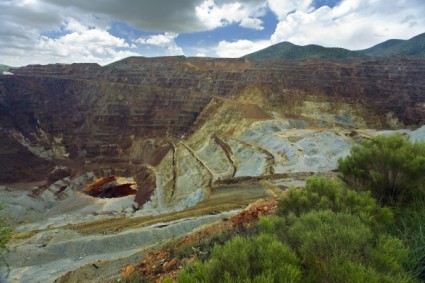
Boston mesothelioma lawyers know that the dollar cost of asbestos abatement in this country has been enormous. mine.jpg

But it's a task that one mining city in Montana felt it couldn't afford not to do.

The Associated Press reports that in Libby, which for his has been grappling with mesothelioma, a deadly cancer caused by exposure to airborne asbestos.

The rates of illness for this small town are startling. With a population of 3,000, an estimated 1,700 have been diagnosed with mesothelioma. That's a rate of roughly 57 percent. That also doesn't include those who have died, which is estimated to be around 400, or about 13 percent of the population.

Fatal asbestos dust from the local mining company, WR. Grace and Co. reportedly covered the town at one point. The company reportedly closed the mine about 20 years ago, but in the years since, there has been a flood of mesothelioma diagnoses.

Twelve years ago, the city embarked on a massive clean-up effort. It's still not done, even after spending nearly $450 million from the federal government. That's only the first phase, with federal regulators from the Department of Environmental Protection saying that some of that asbestos remains at that site.

Still, a city park where the plant once stood recently hosted a wedding and there are blues festivals scheduled throughout August.

The removal work will have to continue.

For 30 years, the site of the Grace plant reportedly stockpiled vermiculite from the nearby mine before it was shuttled by rail for use across the country in attic insulation. Vermiculite, by the way, is a natural mineral that sometimes contains asbestos. The vermiculite that came out of this particular mine did contain the deadly fibers.

In addition to insulation, vermiculite has been used for brake linings, moulded shapes, fireproofing, roofing and even pillows.

In Libby, the town's baseball and football fields were located right next to the Grace plant. The people who today are wrestling with the fatal disease talk about how they used to play in the piles of raw vermiculite when they were just children.

The epidemic is so bad there that the town is under the first of its kind public health emergency declaration, which was issued in 2009 by the EPA. The deaths are likely to continue for a number of decades.

Almost 1 million cubic yards of contaminated material and soil have been so far removed from the town. The next phase of removal is expected to be completed sometime over the next five years.

The fact is, there is no safe level of exposure, and residents understand that even those homes that have been cleaned once will likely have to be cleaned again, as there are still traces of the fibers.

Some have lobbed major criticism of the process, saying some clean-up officials seem to just be throwing money at the issue, without an idea of the real scope. Others have wondered if the town should simply be abandoned altogether.

Traces of the material have been found a number of times even when conducting seemingly mundane projects, such as installing a communication line through a park or renovating home projects.

In fact, there are still six major targets pending for contamination clean-up, and those include: the actual mine, the residential homes, commercial buildings and public properties, a rail line, a mill site, a neighboring town that has seen similar issues and the area's state highways.

All of this would suggest that even for the celebrations, the clean-up is far from over.

Continue reading "Entire Town Plagued With Asbestos Exposure" »

Mesothelioma Advocate Succumbs to Illness

July 19, 2012

An advocate battling for a cure to mesothelioma has died - though his cause has not. runner.jpg

Our Boston mesothelioma lawyers were saddened to hear of the passing of Larry Davis, a Florida runner who raised tens of thousands of dollars for mesothelioma research, and always ended his e-mails with the phrase, "Believe in a Cure - believe in yourself."

Sadly, this disease is not discriminatory. Given that its root cause is airborne exposure to asbestos, which used to be contained in thousands of everyday products in regular use by average Americans, its reach appears to know almost no bounds. It's estimated that about 3,000 people in the U.S. are diagnosed with mesothelioma every single year.

Although research is ongoing, a diagnosis is currently akin to a death sentence. It becomes not if, but rather when.

If the companies that produced these products - which ranged from shipbuilding material to insulation, automobile parts and textiles - didn't know the damage that was being caused, this would be a terrible tragedy.

The fact of the matter is, though, that most of these manufacturers were aware of the danger in which they were placing their workers and consumers, and yet they allowed greed to fuel their continued production anyway - and that's an outrage.

While the disease has claimed a number of famous individuals (Steve McQueen, Warren Zevon and Merlin Olsen, among them), Larry Davis was not famous in the traditional sense of the word. But he did make quite a name for himself, particularly in his last years as he fought tirelessly for a cure.

According to the Sun-Sentinel, Davis was 61-years-old when he was diagnosed with mesothelioma. Doctors at the time gave him six months to live.

That was six years ago.

Given the aggressive nature of this disease, it's practically miraculous he survived as long as he did.

In the years following his diagnosis, he raised close to $80,000 during his 8K races in Boca Raton, called Miles for Meso. Additionally, he competed in races and even triathlon throughout the country, at each one making it a point to raise awareness about the disease and the fight for a cure.

He competed in one triathlon prior to his fifth abdominal surgery since his diagnosis. His wife was an eight-time finisher of the Boston Marathon, and he traveled here with her in April to watch her compete one last time.

Davis was one who beat most odds. Most patients live about 18 months after they're diagnosed. Those who are Davis' age have only a seven percent chance of living another five years.

What's more, Davis' father had died of mesothelioma as well.

A scholarship has been established in his name through the Runner's Edge Foundation, which will be awarded on a yearly basis to a high school senior devoted to community.

While the cure was not found in his lifetime, we could all be served by following in his tracks.

Continue reading "Mesothelioma Advocate Succumbs to Illness " »

Late Actor Steve McQueen's Widow to Testify Before Congress About Asbestos Dangers

July 18, 2012

The widow of the late actor Steve McQueen, who died of mesothelioma, is slated to testify before the U.S. House of Representatives, urging lawmakers to formally ban the import of asbestos into the United States. limelight.jpg

Boston mesothelioma attorneys know it's a widely-held misconception that asbestos is illegal in the U.S. The fact of the matter is, the U.S. Environmental Protection Agency had issued regulations that would have completely phased out the use of asbestos in all products made here. However, the asbestos industry opposed those regulations and won in a court challenge in 1991.

So while it's certainly no longer widely-used, it's not illegal.

This is an extremely important issue to address, given that currently, the only prognosis for someone diagnosed with mesothelioma (caused by airborne asbestos exposure) is death - and usually a very swift one.

Because of the extended latency of the disease, those who were exposed decades ago - when asbestos was commonly used in a wide array of products - are only just now learning of their diagnosis.

While many U.S. manufacturers and builders today do tend to shy away from the use of asbestos in their materials, given the tidal wave of legal action that has ensued, they're still not legally forbidden from using it.

And therein lies the problem that Barbara Minty McQueen hopes to address in her July 24th testimony on Capitol Hill, which will be on behalf of the Asbestos Disease Awareness Organization.

Steve McQueen, who was dubbed, "The King of Cool," died at age 50 in November of 1980 after receiving his diagnosis of mesothelioma less than a year earlier. He passed away on an operating table in Mexico, where he had sought a number of unconventional treatments for his mesothelioma after doctors in the U.S. told him there was nothing more they could do.

He was a veteran of the U.S. Marine Corps from 1947 to 1950. Although Minty McQueen says he was very proud of his service, it was during this time, he believed, that he was exposed to asbestos. He reportedly removed asbestos-filled insulation from large pipes in the ship's hold while he worked in the Navy Yard of Washington, D.C.

There is also the possibility, he believed, that he could have contracted mesothelioma from the asbestos contained on sets and soundstages in Hollywood and New York, or even possibly in the racing suits and helmets he wore as an avid motorcycle racer.

The fact that there were so many products he came in contact with that could have caused his mesothelioma is a testimony to just how pervasive the problem is.

His widow will be speaking at a staff briefing entitled, "Asbestos: Environmental and Occupational Exposure Continues." She recently penned a book about her husband's last days, entitled, "The Last Mile...Revisited."

Her efforts to urge legislators to formally ban asbestos in the U.S. is a noble one, and we support her in it.

Continue reading "Late Actor Steve McQueen's Widow to Testify Before Congress About Asbestos Dangers" »

Illegal Massachusetts Asbestos Storage Leads to Criminal Charges

July 15, 2012

A Massachusetts asbestos case has been gaining attention, as a business owner accused of illegally - and dangerously - storing the deadly compound seeks to have her statements stricken from court. tothedump.jpg

Our Boston mesothelioma lawyers believe the truth should come out. If this woman and her company were jeopardizing public safety to save a few bucks, they should absolutely be held accountable.

According to the Salem News, the 52-year-old ran an asbestos abatement company. This is a company that builders, contractors, homeowners and property mangers might call to come in and properly remove asbestos from old structures. The Massachusetts Department of Environmental Protection has specific guidelines under Massachusetts 310 CMR 4.00. This is the code that stipulates the required notification and work practices for asbestos handling, removal, storage and disposal in order to minimize or avoid releasing fibers into the air, and thereby causing a hazard to workers and the public at-large.

In this case, investigators learned that this particular asbestos abatement company (which we won't name here, because as of yet, they haven't been convicted) wasn't properly storing the asbestos it was hired to remove from schools, hotels and libraries. Rather than following state regulations regarding disposal, officials with the DEP say the business was instead storing asbestos in bags in a self-storage unit.

And we're not talking a few bags. We're talking hundreds of trash bags, packed into two self-storage containers.

One official was quoted as saying that the business owners knew that they weren't properly disposing of the asbestos, but chose to illegally stash it anyway because they couldn't afford to do it the right way.

When the 52-year-old business owner arrived at the storage locker, in the midst of a search being carried out by state environmental officials, she reportedly began going on about how customers weren't paying, there had been a lapse in asbestos removal certificates and that a number of contracts had dropped her services.

It's those statements that are at the heart of the issue before a court right now. The business owner and her attorney are imploring a judge to suppress those statements from the trial because she was reportedly upset that investigators were going through her property. Apparently, some of the items in that storage unit belonged to her late mother. They were alongside the asbestos.

Her lawyer has argued the emotional distress of that ordeal prevented her from making a rational decision.

Additionally, her lawyers argue she should have been read her Miranda rights. While she was not immediately under arrest for the asbestos violation, she was reportedly not free to go because she had an active warrant out for her arrest for prior driving offenses.

Prosecutors, however, argued that she in fact was free to leave - just not in her vehicle, as she had a suspended driver's license. Plus, they contended it was more likely she was upset that investigators were looking into her illegal asbestos storage rather than them looking through her mother's belongings. If they were so important, the state argued, why would they be stuffed alongside the deadly compound?

There is no indication from the media reports thus far that anyone suffered a dangerous exposure to the asbestos. Of course, it may be years before anyone truly knows, as the latency period for mesothelioma cancer is typically decades.

The bottom line is that when you don't follow the removal guidelines, there is the potential for someone to become exposed and become ill.

The judge has yet to make his ruling. The trial is slated to take place sometime in the next few months.

Continue reading "Illegal Massachusetts Asbestos Storage Leads to Criminal Charges" »

$48M Mesothelioma Verdict Won Against Numerous Companies in CA Case

July 10, 2012

Our Boston mesothelioma lawyers are encouraged anytime we hear about sizable verdicts in mesothelioma cases - not just here in Massachusetts, but all over the country.holdhands.jpg

In a sense, even though we work for different law firms, we view other mesothelioma attorneys as fighting the same fight - not only to win compensation for mesothelioma sufferers and their families, but to hold accountable those companies who for years turned a blind eye to the grave risk they perpetuated against their employees and the public at large.

(That said, not all mesothelioma attorneys are the same - do your research and don't commit until you've found a firm with a record of success!)

In this case, we were pleased to learn about a case out of Southern California, in which a retired cement contractor/construction superintendent and his wife were awarded nearly $50 million by jurors following a six-week trial.

Media reports indicate that the 86-year-old, who also served as a former local city councilman, was given $30 million in compensatory damages and another $18 million in punitive damages. Compensatory damages are monies that the jury believes will compensate the victim for his or her injuries. Punitive damages are enacted for the purpose of punishing the defendant.

This verdict is reported to be the largest of its kind in the country this year.

The lawsuit, which was filed last year, had alleged negligence against a number of companies, including Union Carbide, Riverside Cement and California Portland Cement Co.

According to court documents, the plaintiff had worked as a construction superintendent and cement contractor between 1947 and 1980 at a number of locations in the Southern California, Los Angeles-area.

Part of that work meant that he was involved in building hundreds of commercial buildings and residential structures and even a few churches. In doing all of this work, he claimed that he was using asbestos-containing products, manufactured by the above-mentioned companies. Additionally, he was involved in remodeling a number of those structures, and was using those same products in the course of those projects as well.

Although he hadn't been doing that type of work since the early 1980s, he only last July learned that he is suffering from mesothelioma, due to the exposure to asbestos.

His wife was also named in the suit, alleging loss of consortium, or companionship.

The couple's attorney said the not only were the named companies responsible for selling dangerous products, but they spent millions of dollars trying to hide the fact that they were dangerous.

One of the companies, Union Carbide, reportedly put numerous "expert" witnesses on the stand, claiming that their brand of asbestos was not cancer-causing. However, there was documentation and internal memos that suggested the company's staff doctors chastised those in the marketing departments for telling customers that their asbestos wasn't dangerous, when in fact it was.

Continue reading "$48M Mesothelioma Verdict Won Against Numerous Companies in CA Case" »

Credibility of Asbestos Study Questioned

July 5, 2012

A 40-year study that downplays the health effects of asbestos exposure for miners and mill workers has drawn the ire of several mesothelioma advocacy groups. asbestoswall.jpg

Our Boston mesothelioma attorneys know that a hallmark of solid science is objectivity. This particular study, conducted by Dr. John Corbett McDonald of the McGill University's School of Occupational Health, based in Canada, has been criticized for lacking transparency and for being biased toward the industry.

It is a fact that the Chrysolite Institute, which is a lobbying group established to promote the use of asbestos in overseas products, uses the 40-year McGill study to bolster its claims of asbestos safety.

But why would a reputable scientist risk that reputation in order to show the asbestos industry in a favorable light?

According to an investigation by CBC News, it all boils down to money.

Back in the 1960s, the dangers of asbestos were becoming more widely known and understood. The industry, however, didn't want to risk government regulation. That would have meant huge profit losses and lawsuits (which later ended up happening anyway, but they were trying to avoid it at the time).

So it took its cues from the tobacco industry, with the overarching view that industry is always best suited to look after its own issues. (Of course, as we now see clearly, that's not true when it comes to preserving public health; industry is out for industry.)

Just look at the tobacco industry. There were in fact many scientists on big tobacco's payroll who attested to the fact that cigarettes were simply a healthy stress-reliever - an account we now see as so blatantly false as to be laughable, if the consequences of those lies weren't so devastating.

But in this vein, it hired a scientist to begin research on the issue.

Who did they hire?

According to CBC, it was none other than Dr John Corbett McDonald of McGill.

The news station produced documents showing that McDonald and other researchers at the school accepted checks form the Quebec Asbestos Mining Association between 1966 to 1972, for amounts that today would translate into several million dollars.

The results of the McGill study seem to indicate it was exposure to another chemical, tremolite, that caused mesothelioma more frequently than did the asbestos.

McGill researchers reportedly refused to give the raw data to CBC reporters, but said it would be conducting an internal investigation regarding the integrity of the results. That investigation is ongoing.

Now, without seeing the raw results of this study ourselves, it's hard to make a conclusion one way or the other about whether the study was flawed. However, there is a great appearance of impropriety, whether or not the research itself remained untainted.

What we do know is this: The World Health Organization has concluded that all types of asbestos cause lung cancer, mesothelioma and asbestosis, and further that there is absolutely no safe level of exposure.

While the substance has been widely shunned by U.S. manufacturers since the 1970s, people continue to learn they have been sickened by mesothelioma, as the disease has an extremely long latency period. People who have been exposed to the airborne asbestos toxins don't learn until decades later that they are ill.

Continue reading "Credibility of Asbestos Study Questioned " »

$173 Million Asbestos Repairs Completed in the Capitol

July 1, 2012

Our Boston mesothelioma lawyers realize that asbestos litigation is a commitment. washingtonmonument1.jpg

It's rarely a swift process, despite the fact that the courts do realize that those who have been diagnosed with mesothelioma are working with borrowed time.

But for those who struggle with lung cancer, asbestosis or mesothelioma, it's not always about the money. It's about justice and holding agencies accountable for negligence.

Such was the case with 10 Architect of the Capitol employees, federal government workers charged with the construction and preservation of our nation's iconic monuments. These are structures such as the U.S. Capitol Building, the Senate Office Buildings, the House Office Buildings, the U.S. Supreme Court, the Capitol Visitor Center, the Library of Congress, the Capitol Grounds and the U.S. Botanic Garden.

These workers alleged that back in 2000, health and safety hazards were first discovered in the miles-long underground utility system that runs beneath Capitol Hill. These are the underground pipes and tunnels that are used to provide steam and chilled water to the federal facilities.

Some of those hazards included excessive heat, falling concrete - and asbestos.

Lab tests indeed determined that certain AOC workers were exposed to "extremely high" levels of asbestos.

There was even testimony on Capitol Hill that Congress hadn't done enough to protect workers.

The workers who blew the whistle on those dangers suffered harassment and retaliation for speaking out. They later received an undisclosed settlement.

That agreement, between the federal Office of Compliance (OOC) and the AOC, stipulated that repairs to the tunnels would be completed within the next five years - with full abatement completed by June of 2012.

Congressional officials several times lamented that there wasn't enough money to complete all of the work. Of course, if the alternative meant Congressional members would have to suffer no steam or chilled water to their facilities, certainly, they might have been persuaded to fix the problems sooner.

And in fact, the AOC did spend $173 million million to cover the repairs, and declared its obligation had been satisfied. Both agencies applauded one another for the completion of the work.

But the fact of the matter is, it took years for the agency to step up and take action, even after they knew the dangers to which they were exposing their workers.

A former supervisor at the AOC who now suffers lung diseases as a result of his exposure to asbestos, said it angers him to hear the agencies pat one another on the back.

The announcement, he says, is nothing but paperwork. His illness is something he lives with each day.

"After 15 years of ignoring health issues," he told a Roll Call reporter, "You don't settle with anybody."

Continue reading "$173 Million Asbestos Repairs Completed in the Capitol" »