Articles Posted in Boston Mesothelioma

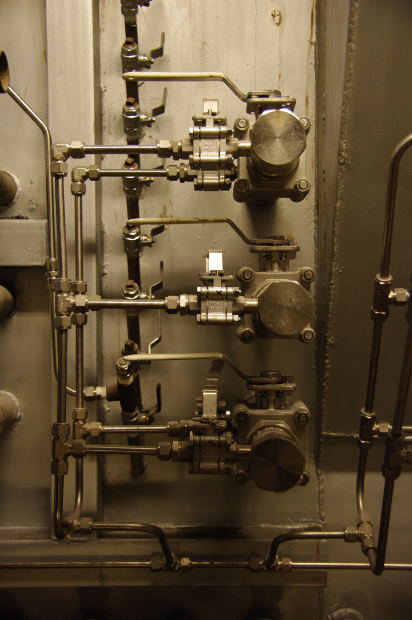
We know that manufacturers of products sold in the U.S have a duty to warn consumers of potential risks. This is certainly true with makers of asbestos-laden products, particularly where users are at risk of exposure to deadly asbestos fibers or dust, which are toxic when breathed in. valve

But what duty do makers of non-asbestos products have to warn when there are asbestos-containing parts that are made by a third party but used in its non-asbestos product?

Recently, the New York Court of Appeals – the highest court in that state – took on this issue in Dummitt v. Crane Co. Continue reading

Two multi-million dollar verdicts by separate juries in two asbestos injury cases in New York resulted in damages collectively totaling $28 million, to be paid by boilermaker Burnham.boiler1

According to Legal Newline, one case resulted in the estate of one man receiving a $6.25 million victory in mid-June, while a second case awarded a man suffering from mesothelioma $22 million.

In both cases, plaintiffs allege they were exposed to deadly asbestos fibers after coming in contact with boilers made by Burnham.  Continue reading

Most people have heard of Warren Zevon, or at the very least heard some of his songs. Some of his more famous songs included “Werewolves of London,” “Lawyers, Guns and Money,” and, “Poor Poor Pitiful Me.”  Many are aware that he died in 2003 from cancer, but it is not well known that he died of mesothelioma. He was only 58 years old when he died of malignant mesothelioma.  His death also occurred a time in his life when he had decided to give up most his bad habits and live a healthy life. His son said he was living healthy and even taking dancing lessons when he first noticed the symptoms that would ultimately lead to his diagnosis of malignant mesothelioma.

shotThese days, Zevon’s son is taking up the fight to make people aware of the deadly disease of mesothelioma and raise money to find a cure.  There are treatments, but they basically require very invasive surgery, radiation, chemotherapy, and, even in the best case scenario, will normally only extend a patient’s life for a short period of time, but there is nothing close to the success rate we see with the treatment of other types of cancer. Continue reading

The “every exposure” theory in asbestos litigation has been widely criticized and many judges have concluded it doesn’t pass muster in a court of law. The crux of it is that because no amount of exposure to asbestos is safe, every exposure to asbestos must be harmful. But simply showing a single exposure – or just a few exposures – to asbestos usually isn’t enough to win a personal injury or wrongful death case. gavel7

That means asbestos injury attorneys have to be prepared to introduce as much evidence as possible showing plaintiff endured a great deal of exposure. Failure to do so may result in an outcome like what was seen recently in Georgia in the case of Scapa Dryer Fabrics Inc. v. Knight et al., in which the Georgia Supreme Court tossed a $4 million mesothelioma verdict, finding the use of the every exposure theory in trial was inadequate to prove defendant’s liability.

Specifically, the court ruled, plaintiff’s expert witness failed to analyze the extent of exposure in any sort of meaningful way and he also failed to qualify his opinion on causation by limiting it to such an estimate of exposure.  Continue reading

A recent news feature form Reuters looks at the relatively unknown reality that asbestos is not technically illegal in the U.S.  There was an attempt to ban asbestos in the late 1970s via a regulatory action by the United States Environmental Protection Agency (EPA), but the muscle of these prohibitions were removed as the legislation was overturned by action of the U.S. Supreme Court by the early 1980s.

asbestosFor this reason, small amounts of asbestos are still being used in the U.S., and these small amounts may still be deadly to those exposed. As discussed in the news feature, the number of deaths and new mesothelioma cases has not gone down, as we would have hoped, despite a major reduction in the amount of asbestos being used. In fact, they have actually increased.   One thing to understand is that not all asbestos is the same – but all can be hazardous to your health.  Continue reading

Some defendants in asbestos litigation, facing crippling debt in the face of accountability for concealing the danger of their products and failing to protect the public, filed for bankruptcy and established trusts to pay out current and future claims.gavel21

More than 100 companies have filed for bankruptcy protection due in whole or in part to asbestos litigation, collectively containing about $20 billion in assets – and another $12 billion in assets pending, according to an analysis by Bates White Economic Consulting. It’s important for mesothelioma attorneys to keep careful tabs on how much is contained in these trusts because it plays a role in how much will be paid out per each individual claim.

Many of the bankrupted companies – and claimants – have relied on previous insurance policies to make good on claim payments. In fact, a 2015 report by rating agency A.M. Best Co. indicated the insurance industry has paid out more than $90 million in combined asbestos and environmental losses, and there is approximately $27 billion still available to fund future payments. This heavy reliance on the insurance industry makes it imperative to follow the cases that may have an impact on claimants’ ability to collect. Recently, the U.S. Bankruptcy Court for the Southern District of New York recently ruled in Rapid-American Corp. et al. v. Travelers Casualty & Surety Co. et al. that providers of excess insurance to a now-bankrupt asbestos product manufacturer do not have to provide coverage unless and until the primary insurers have paid in full under those policies.  Continue reading

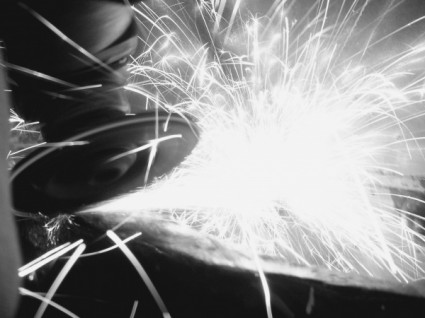
A brake arcing machine manufacturer can be held accountable for toxic asbestos exposure to a mechanic, even though its product did not actually contain asbestos. sparks1

These machines were used to grind asbestos-laden brake linings in auto mechanic shops throughout the country for decades.

Defendant in the California case of Rondon v. Hennessy Industries, Inc. argued that not only did its products not contain asbestos, but its machines were not designed to be used exclusively with products that contained asbestos. There was in fact ample evidence its machines were used on non-asbestos brake pads. It was based on this the trial court dismissed. But plaintiff appealed, and now the California Court of Appeal, First Appellate District, Division Four, has reversed, finding this “exclusive use” standard the defendant used should not have been used. The proper test was the “inevitable use” test, in which it is determined the machines would inevitably be used in a way that exposed workers to asbestos dust without adequate warning or protection.

According to court records, plaintiff developed mesothelioma after years of working as a mechanic and being exposed to asbestos dust while grinding brake linings. He alleged it was the brake arcing machines that actually released the dust into the air as he worked from 1965 to 1988. He alleged the manufacturer of these machines was liable under theories of both negligence and strict liability because, he argued, these machines had no other function than to grind these asbestos-filled brake linings.  Continue reading

A recent article from Eco Watch looks at how those in the asbestos mining and manufacturing industry were well aware of the dangers their product posed to humans, but did whatever they could to hide that information from the general public. While we have known this for quite some time, and it has been the basis for many favorable verdicts in asbestos injury lawsuits, it is interesting to see when they knew and what steps they took to hide the dangers.

xrayanalysisThe first thing to keep in mind is that asbestos is not man-made. In fact, it is naturally occurring substance comprised of six silica elements, and humans have used it for thousands of years.  In earlier times, it was used primarily due to its natural ability to resist heat, fire, caustic chemicals, and electricity, but eventually it was primarily used as a binding agent in construction materials. Dry wall joint compound, for example, frequently contained deadly asbestos fibers. Continue reading

According to a recent news feature from Oregon Live, a local jury has just awarded $8.75 million to a man who is currently dying from malignant mesothelioma due to asbestos exposure that occurred around 40 years ago.

old-worn-out-boots-1013579-m-300x261The victim is a 65-year-old man who first became exposed to the deadly asbestos fibers when he worked on construction sites when he was in his 20s.  He was a carpenter and was regularly exposed to a product manufactured by the defendant.  The product was applied to drywall by other workers and was used as a joint compound.  Continue reading

According to a recent news feature from the Eagle-Tribune, a local couple that operates an asbestos abatement business have been charged with fraud, are seeking to get the court dismiss those charges. They are currently being accused of committing fraud against employers who are members of a Massachusetts construction workers’ union, and the fraud is alleged to be in the amount of $2 million.

asbestosAsbestos abatement (removal) is a very expensive process and can be very profitable for those certified and licensed to perform the work, but there are also a lot of associated expenses. Pursuant to the law in Massachusetts, properly trained asbestos abatement technicians who are licensed or certified must do the work, and they must be provided with proper safety equipment, including respirators or ventilators. Continue reading

Contact Information