Group Picture of the Law Offices of Jeffrey S. Glassman
Justia Lawyer Rating

Our Boston mesothelioma lawyers were disappointed to hear about the conviction of a doctor in West Virginia and two attorneys from Pennsylvania on charges of falsifying information in asbestos lawsuits – of which they had filed thousands.hand-cuffs.jpg

Defendant asbestos lawyers have, of course, seized on this case as evidence of some wider problem with asbestos-related claims.

However, the truth of the matter is that the overwhelming majority of mesothelioma claims are legitimate. It’s incredibly upsetting that the alleged irresponsible actions of a few individuals will reflect poorly on so many legitimate victims. Nor is it in any way an accurate reflection of the deep commitment we personally hold for obtaining justice and compensation for our clients who were legitimately wronged.

What this will mean moving forward is that claims of asbestos-related injury may endure a higher level of scrutiny.

This makes it even more critical for mesothelioma patients and their families to put their trust in a law firm with proven experience and dedication to an accurate and thorough pretrial investigation. We take the time to analyze every aspect of your case in advance of trial. We can anticipate the tactics and angles of the defense – because we’ve been there so many times. We work to make sure you’re well-prepared for depositions, as well as trial. We know what to expect, and we know how to win – the right way.

In this case, the jury found this kind of diligence did not take place, though the men convicted say the jury got it wrong.

According to The Associated Press, the law firm filed an estimated 14,000 asbestos cases against CSX Transportation, a Florida-based company, on behalf of supposed victims, whom this one doctor diagnosed.

It was the radiologist who first came under fire in 2005, when a judge in Texas heard reportedly questionable testimony from the doctor regarding a patient with a lung disease called silicosis. Then the next year, CSX Transportation filed a lawsuit against the doctor and the Pennsylvania lawyers, saying hundreds had been falsely diagnosed with asbestosis, their cases taken to trial. (This is a lung disease which, like mesothelioma, is caused by breathing in asbestos fibers. Asbestos tends to be more of a chronic condition, while mesothelioma is acute and quickly fatal.)

At trial, CSX argued that the radiologist had initially found hundreds of patients to be free of asbestosis. However, the doctor had later changed his diagnoses in those cases. While CSX couldn’t present each of those claims in court, it did highlight its case with 11 instances.

The Pennsylvania lawyers, however, countered that CSX was only able to show that 11 out cases out of 14,000 had no reasonable basis. Other witnesses testified on behalf of the attorneys and doctor, saying that even in those 11 cases, x-rays were consistent with asbestosis.

However, the jury still found the attorneys and doctor guilty of conspiring to fabricate claims and civil racketeering. They have been ordered to pay at least $430,000, though that fine could be tripled, due to the racketeering charge.
Continue reading


Once again, a company is in trouble for violating environmental laws designed to protect workers and the public from asbestos exposure. gavel3.jpg

While our Boston mesothelioma lawyers focus primarily on cases in which individuals have already been diagnosed with asbestos-borne cancers, we believe it’s important to highlight the fact that abuses are still ongoing.

We have heard arguments from some who say that the payouts in mesothelioma cases are too high or that there are far too many cases in general. However, situations like this illustrate why we will likely be seeing mesothelioma litigation cases filed for years to come. It has to do with companies failing to take proper – and lawful – precautions to protect workers, consumers and the public.

In this case, as reported by The Cordova Times in Alaska, a copper company was charged and eventually convicted with violation of federal environmental laws – specifically, the Clean Air Act – for its release of friable asbestos into the air at a property in the downtown area of the capitol, Anchorage.

The chief district court judge overseeing the case sentenced the company to three years of probation and payment of a $70,000 fine. Additionally, the company was ordered to hire an environmental consultant full-time to help make sure that no further violations take place.

According to the newspaper, the copper company owns and manages several buildings downtown – a cluster of which it purchased in 2009. At the time, the company was aware of the fact that these properties contained asbestos throughout – in the floors, ceilings and walls. Further, the company knew that certain precautions were required for handling and disposal would be required in order for them to be demolished or renovated.

Despite having this knowledge, the company moved forward with demolition of one building and renovation of another. They took no steps to hire a specialized asbestos abatement company, and perhaps even worse, the employees asked to do the work had no idea that there was asbestos in the building or that they were being exposed to a deadly hazard. These workers, who had zero training in removing asbestos and were not given personal protective gear, were placed in imminent danger of serious bodily injury.

The truly sad part is those workers will likely not know for many more years whether their exposure to the airborne asbestos has made them sick, as mesothelioma and asbestosis take years to manifest.

Similar cases in Massachusetts abound. As we recently reported in our Boston Mesothelioma Lawyers’ Blog, last month a Boston lobster company was fined $100,000 for failure to properly handle asbestos during numerous projects.

The U.S. Clean Air Act, as defined in U.S. Code Tittle 42, Chapter 85, requires that companies take certain precautions when conducting renovation or demolition projects on structures containing asbestos, as well as with regard to disposal of the material.
Continue reading

A petition filed by a Baltimore attorney could breathe life into approximately 13,000 long-dormant asbestos cases, and potentially affect the way mesothelioma cases across the country are handled. balance.jpg

Our Boston mesothelioma lawyers are closely following the developments of this case, which targets how the capitol city of Baltimore handles the very large number of mesothelioma lawsuits that began to be filed in the late 1980s and early 1990s.

Once the 1990s rolled around, the city set up a two-tiered system in order to handle the flood of asbestos lawsuits being filed against companies for negligence in knowingly exposing workers, consumers and the general public to the deadly compound. The Baltimore system involved shuffling the sickest people in the front of the line, so to speak, giving them priority. Meanwhile, those who claimed exposure but had no symptoms were sent to the end of the line.

After establishment in Baltimore, this same system was then copied by numerous other jurisdictions across the country. Consolidated cases have become exceedingly rare since then, and only a few number of cases from the “back-burner docket” go to trial each year in each district. That’s a huge number of plaintiffs who have been left to languish indefinitely. (It’s estimated some of these cases could take as long as four decades to get their day in trial, by which time almost everyone involved will surely be gone – or close to it.)

The system may have made some sense at the time. But the problem is, many of those people who were sent to the end of the line are now very sick, having been formally diagnosed with mesothelioma. This is an asbestos-caused cancer that takes years to manifest, and then when it does, it progresses quickly and is fatal. Because of this and due to the congestion of these cases in the courts, these plaintiffs have no realistic opportunity to have their cases heard before they pass away.

So this is where the Baltimore attorney is trying to enact change in the system. He is proposing to revert back to an earlier method of handling the voluminous number of asbestos cases. That method involved having the circuit court consider a large number of cases all at once by using a few examples to establish a broad correlation between illness and asbestos. This would effectively allow plaintiffs to sue in groups, based on their general circumstances, instead of having to wait years to have their case heard individually.

If the court approves the proposal, it could mean some 13,000 old cases would be brought back to to the table.

Of course, the defendant lawyers are vigorously opposing this effort, calling it a “backdoor attempt” to push them into settling cases that can’t stand on their own merits. They argue that returning to the old method would mean a violation of their right to a fair hearing.

It will be up to the circuit judge to decide if this is true and if so, if the degree to which it’s true trumps the plaintiffs’ right to have their cases heard before they die.

It’s not clear when a decision may be forthcoming, but we will certainly keep you posted.
Continue reading

The insurance industry had underestimated the amount it would have to pay out in asbestos-related claims by about $11 billion.onemilliondollars.jpg

Our Boston mesothelioma lawyers understand that the industry had previously estimated it would spend about $74 billion. They’ve already paid out roughly $51 billion in claims from decades-old policies. However, they had only set aside another $23 billion for future claims.

As it turns out, according to a new study by the A.M. Best ratings firm, the insurance companies will likely need about $11 billion more. What’s more, the number of mesothelioma and asbestosis lawsuits show now sign of slowing anytime soon, the firm warned.

The reasons for the underestimation are varied. Primarily, it has to do with the fact that juries are awarding higher amounts on individual claims than previously anticipated, and there are more claims in general. Plaintiff attorneys – those representing your rights – have had an increased measure of success in recent years, perhaps explained by a better understanding of how and why this disease develops and what it takes to prove negligence to a jury.

The burden of proof is still on plaintiff attorneys – so you need a good one – but what must be proven is fairly straightforward.

Numerous manufacturers and companies in the 20th Century produced and used asbestos and products made with asbestos, a dangerous mineral compound that exposes people to a slow developing but fatal cancer called mesothelioma.

Symptoms are non-existent for decades. When the disease is finally diagnosed – usually following bouts of shortness of breath, constant chest pain or cough, night sweats or feet swelling – the prognosis is usually poor, and the disease progresses rapidly. (This is why we are just now seeing cases brought forward where exposure happened in the 1980s and earlier.)

The reason you may have grounds upon which to sue the manufacturer or your former employer or whichever entity subjected you to exposure (and there may in fact be several) is because of the fact that many of these firms where aware of the danger asbestos presented. Yet, they failed to warn or take steps to protect employees or consumers. This negligence has resulted in a flood of lawsuits that collectively have resulted in billions of dollars in payouts.

In fact, A.M. Best reports there are far more claims overall than what the insurance industry anticipated. But this should not have come as a surprise, as there were a very large number of people exposed to asbestos over an extended period of time. Even if many of those individuals have since passed, their survivors often will bring action against these companies on their deceased loved ones’ behalf.

Asbestos hasn’t been widely used since the 1970s, so the cases will taper off at some point – but not any time soon.

The additional $11 billion the insurance industry is expected to dole out over the next several years won’t be enough to cripple the industry, but some have expressed worry.

However, to put it into perspective, $11 billion is about half of what insurers are expected to pay out in losses following Hurricane Sandy.
Continue reading

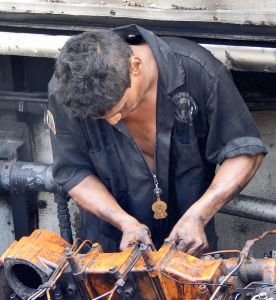
A former employee of General Motors has been awarded $3 million by a New York jury, which found the worker’s mesothelioma was a direct result of exposure to asbestos contained in the products the company manufactured. dieselmechanic.jpg

Our New England mesothelioma attorneys know that the auto industry was one of the largest offenders in terms of exposing its workers to asbestos fibers, which are the only known cause of mesothelioma, a terminal cancer. The span between exposure and diagnosis is often decades, which means we are just now beginning to see cases filed on behalf of auto industry employees who worked for companies like GM in the 1940s through 1980s.

This case, according to local news reports, stems from a now-deceased worker’s employment at GM between 1964 and 1979. His job was to repair valves that were manufactured by a firm called Crane Co. His duties required him, at least in part, to remove asbestos from the gaskets. Doing this released asbestos dust. As you probably know, asbestos when left undisturbed may not pose any significant risk. However, when it becomes friable and airborne, the fibers are inhaled in the lungs and form scar tissue that can develop into ailments like asbestos or pleural mesothelioma.

This plaintiff had been retired for several years when he was diagnosed in late 2010 with mesothelioma. He was 77 years-old when he died a year later.

A lawsuit was filed on his behalf by his wife and adult daughter, who is disabled.

During the course of the trial, the issue of “safe asbestos exposure” was weighed after being presented by the defense. Of course, this is a common tactic sometimes employed by asbestos defendants. Because they can’t get around the fact that they exposed workers to the substance, knowing it was dangerous, they attempt to argue that the amount of asbestos was so small as to be too insignificant to manifest itself in the form of cancer. Of course, this is not true. Many medical doctors and researchers have debunked the theory of a “safe exposure amount.”

The jury concurred, and awarded the widow and her daughter $3 million in damages, a portion from GM, a portion from Crane Co. Other entities settled with the pair out-of-court.

GM is one of many companies that used asbestos well into the late 1980s, knowing that it was dangerous and without providing any type of warning to employees or consumers. Many of the asbestos cases against the company stem from its clutch facings and brake linings. Some of those who worked for the company and may have been exposed to asbestos include:

  • Appliance repairers and installers;
  • Auto mechanics;
  • Engineers;
  • Factory workers;
  • Machinists;
  • Warehouse workers;
  • Railroad brakemen.

The company does have an asbestos trust that was established following its 2009 bankruptcy, which was partially the result of nearly $640 million in liability for asbestos claims. (It’s worth noting, however, that the industry was already struggling at that point.)

Even when a company has an asbestos trust, plaintiffs can still choose to file a claim on their own. It’s usually a longer process, but if successful, the payout tends to be more substantive.
Continue reading

A bill that will likely prohibit mesothelioma patients from filing civil lawsuits and obtaining compensation has passed the Ohio Senate. tosignacontract.jpg

Boston mesothelioma attorneys
are concerned not only for what this means for Ohio sufferers of this awful disease – but for the precedent it may set for lawmakers in other states. So far, similar measures have been discussed also in Texas, West Virginia, Louisiana and Oklahoma.

Those who support the Ohio bill, which passed 19-14 in the state senate earlier this month, say that it will prevent the duplication of asbestos lawsuits and make it nearly impossible for plaintiffs to “double dip.”

It has to do with the fact that most mesothelioma plaintiffs pursue damages from multiple defendants in the course of seeking justice. What this law purports to do is to hold defendants accountable only for their share of damages. In theory, this may appeal to a basic sense of fairness.

But in doing so, it sets the bar to an almost impossible high for plaintiffs – even going so far as to have them facing criminal perjury charges if they don’t comply. Essentially, it requires that anyone who files an asbestos or mesothelioma claim will have to at that time list all similar claims listed by them or on their behalf. Not only that, but they will have to spell out the evidence used in each of those cases.

Plus, if a defendant in one of these cases has reason to believe that certain information was withheld or that the plaintiff is not suing another entity when they could be, the defendant can petition the judge to delay the trial.

The fact is, these defendants are already notorious for delaying trials. They know that plaintiffs don’t have much time, and they shamelessly use this fact to their advantage.

Plaintiffs who don’t comply with this new law would potentially face perjury charges. Let us remind you, these plaintiffs are people who have been diagnosed with an aggressive terminal illness caused by the negligence of others, who did so for a profit – and these state lawmakers have been convinced that threatening dying patients with felony charges for failing to properly file was the best way to ensure justice?

Compounding matters in Ohio is the fact that just 10 years ago, state leaders had already passed a different measure that made it more difficult for mesothelioma patients to sue. It required that they demonstrate “a substantial impairment of health” beyond what could be documented on an X-ray. That resulted in approximately 90 percent of the approximately 40,000 pending cases at the time to be dismissed outright.

Clearly, this bill is not about reducing fraud or fighting fair. This is about protecting the interests of these defendants – at the expense of those they have knowingly harmed with their actions.

The bill must be sent back to the state House of Representatives to approve minor tweaking done by the Senate, at which point it will be forwarded to the governor’s office for approval. He could veto the law, but there has been no indication that he plans to do so.
Continue reading

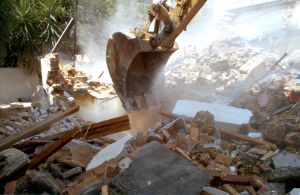
The first of eleven defendants from two different companies indicted on 23 counts by a federal grand jury last summer has pleaded guilty to an attempt to cover-up the illegal removal and disposal of asbestos. demolition1.jpg

Boston mesothelioma lawyers
know that more and more often, state and federal authorities are pursuing criminal actions against those who violate environmental laws designed to protect against exposure to the deadly fibers. These cases show us that the risks posed by this once widely-used product have not dissipated, and officials must remain vigilant against those who are negligent with regard to the safety of workers, nearby residents and consumers.

Asbestos, when left undisturbed, may not pose a major health risk. However, if the particles become airborne, they become deadly.

This case, out of New York state, in particular is noteworthy for the fact that so many people were reportedly involved in the cover-up. One of the companies was an air quality control firm, which allegedly failed to properly conduct the required tests.

Local news reports indicate that the first person to plead guilty in the case was the project compliance monitor for that company. He admitted to being an accessory after the fact. As part of his plea, he has admitted that he falsified inspection reports in order to protect the contracting company that was hired to remove asbestos from an older, six-tower housing complex.

As the first to plead, he was allowed to plead to one misdemeanor charge, as opposed to any of the felony charges he could have faced, in exchange for his testimony against the other remaining defendants. These defendants also include government inspectors – two from the city and one from the state.

The former compliance monitor has attested to the fact that both he and the contractor supervisor conspired to officially report that the asbestos had been successfully removed from four of the buildings, despite knowing this wasn’t true.

To grant some perspective, this is a huge complex sitting on 17 acres of land. It had been a notorious blight on the area, which was visible from the expressway and positioned just behind a large medical center.

Then, the housing authority made the decision to tear the structures down and redevelop the site into a $100 million retirement community. But in order to legally demolish property containing asbestos, the housing authority had to first hire a company to properly remove the asbestos – something they believed they had done.

However, court documents allege that the companies told workers to cut holes in the floors and dump the material down these holes. Workers also didn’t properly wet down the asbestos before the work – a process that makes it less dangerous to handle because it decreases the risk of the fibers becoming airborne. The material was also reportedly left in open-air containers throughout the site.

At this point, both companies are now out-of-business.
Continue reading

An asbestos products manufacturer contracted by the U.S. Navy in the 1950s and 1960s is being sued by a man who later developed mesothelioma. boatsinsfbay.jpg

Unfortunately, our Boston mesothelioma lawyers understand the company may have a good chance of ducking responsibility, given the Seventh Circuit Court of Appeals’ recent ruling to remand the case back to federal court, where the firm hopes to obtain immunity.

In Ruppel v. CBS Corporation, the issue is whether a contractor for the government has a “colorable federal defense” in accordance with 28 U.S.C. 1442(a)(1). This law holds that when a civil action against the U.S. government or any agency or officer of the U.S. government or any person acting under that officer or agency is filed in state court, it may be removed by that party to a U.S. district (federal) court.

The reason the defendant in this case wants the lawsuit to be heard in federal court is that it plans to make the argument that it is entitled to immunity as a government contractor. The company, which at the time was doing business as Westinghouse, doesn’t deny that it made and sold asbestos products to the Navy. However, it maintains that this was done in accordance with direct specifications from the Navy. The company further asserts that the Navy had known of the dangers of asbestos since the early 1920s, and yet ordered these products anyway. (Specifically, we’re talking about turbines.)

The plaintiff alleges that he was exposed to the asbestos from the company both during his Navy service and later when he oversaw the construction of a Navy ship as a civilian. From start to finish, this spanned from 1946 through 1971.

But as is typical with mesothelioma cases, the plaintiff did not become ill until decades later. Early this year, he filed a civil lawsuit in state court in Illinois against CBS, as well as 40 other defendants for his mesothelioma diagnosis, contending he contracted the disease as a result of exposure to asbestos products that were made, sold, distributed or installed by each of the defendants.

CBS moved to have the case remanded to federal court under the above-stated federal statute. That request was granted, but then the plaintiff appealed to the federal judge, saying he was only arguing a failure to warn, for which the Department of Defense does not provide immunity. The federal judge granted this request without allowing the defense the opportunity to respond.

CBS then appealed to the Seventh Circuit, which reversed the federal judge’s decision and ping-ponged the case back to federal court. The appellate court said that while the plaintiff had mentioned the failure to warn issue in his complaint, the core of the complaint had more to do with his actual exposure.

This move, of course, gives the defendant a strategic advantage. It shows too that the legal teams that represent these firms are savvy and aggressive. You need someone your side who can match them pound-for-pound – and beat them.
Continue reading

A Superior Court judge in Massachusetts recently slapped a demolition firm with a $100,000 penalty for failure to properly remove and dispose of asbestos waste during numerous projects. oldhouse.jpg

Our Boston mesothelioma lawyers never cease to be amazed by these businesses that continue to take chances with this deadly substance, despite their awareness of the risk it poses to their employees, the public and the environment.

Asbestos is a naturally-occurring fiber that was used extensively throughout the 20th century for everything from auto parts to ceiling tiles. But it was known throughout this time to be a carcinogen when the fibers were inhaled. A person will show no symptoms for decades, and then be diagnosed with mesothelioma sometimes 40 or 50 years after exposure. Upon diagnosis, the disease progresses rapidly and is fatal. There is no known cure.

Industrial workers and military veterans especially are at-risk today, having repeatedly come in contact with the fibers years ago on the job, exposed by companies and manufacturers that knew this material to be dangerous.

And now today, even despite laws that are very strict with regard to how asbestos must be handled and disposed of during a demolition or renovation, companies continue to blatantly proceed without regard for the health or safety of those in the vicinity.

Why?

Because it’s expensive to do it right.

What they may not realize is that, years down the road, the cost of doing it wrong is even more expensive, particularly if those who are exposed later become sick and pursue legal action.

In this case, a civil complaint was filed against the company by the Massachusetts Attorney General’s Office. It was alleged that the firm violated the state’s Solid Waste Management Act and Clean Air Act by improperly removing and disposing of asbestos material without notifying the Department of Environmental Protection, as the law requires. The company reportedly did this on multiple occasions.

The attorney general’s office also alleges that while the company was transporting the asbestos from the demolition site to the dump site, it didn’t properly secure the material in the vehicles, creating a risk that the deadly fibers would become airborne. Plus, the site where the company took the material to be dumped lacked a permit to accept asbestos-containing waste.

These acts reportedly took place at the old Hook Lobster building in Boston, as well as in Swampscott, Malden and Saugus. The former structure had been a landmark on the waterfront, but was burned to the ground in a fire.

The company maintains, despite the penalty, that it did not break the law. The judge ruled that the firm will have to fork over $50,000 of that penalty during the next handful of years. When that is paid, the rest of the fine will be suspended for five years. If, during that time, it avoids any further violations and complies with a consent judgment, it won’t have to pay the other $50,000.
Continue reading

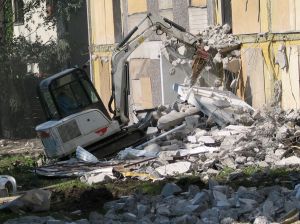
A man who was criminally convicted for violation of federal asbestos laws will appeal his four-year sentence — using money from the very taxpayers he reportedly exposed to the fibers. demolition.jpg

Our Boston mesothelioma lawyers know that criminal charges in asbestos cases are not the norm. Typically, it is either a civil penalty imposed by the government or a civil lawsuit filed by an individual who has been diagnosed with mesothelioma.

Still, it is satisfying when we see justice has been served with regard to an individual who put an entire community at risk. We will see whether his sentence can withstand the appeal process, which would send a clear message to other firms that such conduct will not be tolerated.

According to the local news in Tennessee, where this case arises, this defendant and two others were convicted on federal charges of violating the Clean Air Act, as well as obstruction of justice – the latter of which carries a 20-year maximum penalty. Apparently, the defendants were involved in a major asbestos abatement mess that forced the Environmental Protection Agency and others to pay for an aggressive clean-up back in 2005. A fourth man, brother to this defendant, was also convicted, but died six months prior to the sentencing.

Prosecutors say the brothers founded a small company in 2003 for the purposes of buying an old industrial plant, demolishing it, selling whatever was of value inside and then reselling the property once it had been cleared.

The problem was, there was a large amount of asbestos in all sorts of materials throughout the property. The federal EPA has very strict standards with regard to how such a project must be carried out.

The brothers opened a bid for the asbestos abatement work, and first received an estimated of roughly $215,000. They then got another bid for $129,000. Another bid came in at $30,000. They went with the lowest bid.

Needless to say, the work was not done properly. Workers were seen haphazardly handling asbestos by hand and throwing it into garbage bags. The contractor reportedly hired drug addicts, day laborers and people they found on the street – all of whom were not trained to handle asbestos abatement work, and likely had no idea of the risks they were assuming.

When an inspector from the county’s Air Pollution Control Bureau stopped by in the fall of 2005, he said it reportedly looked like an asbestos bomb had exploded. Work was immediately halted and a massive – and expensive – clean-up effort was initiated.

Prosecutors say the likelihood that the workers on that site will develop mesothelioma within 5 to 50 years is “high.”

Now, the main defendant in the case, the surviving brother, is trying to appeal his conviction. This would not be out-of-the-ordinary, but for the fact that he is claiming poverty and the need for a court-appointed (and taxpayer-funded) defense lawyer. However, prosecutors contend that while he was undergoing trial, he had transferred ownership of more than 40 real estate properties to his wife.

The court granted him a public defender, with the stipulation that the situation could change if it is later determined he does indeed have the funds to cover his own continued defense.
Continue reading

Contact Information