Articles Posted in Boston Mesothelioma

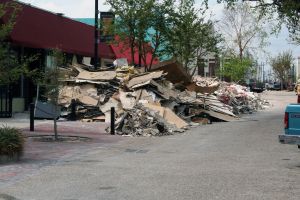
As those in Massachusetts and throughout the East Coast begin to recover from the punishing wind and flood damage caused by Hurricane Sandy, the massive storm has given rise to another concern: asbestos exposure. katrina.jpg

Boston mesothelioma lawyers understand that although the storm didn’t technically make landfall until it reached New Jersey, the winds punished a large swath of the Massachusetts coastline, toppling power lines and trees, causing power outages and, in some cases, damaging older structures.

It is the latter of these that causes the most concern, in Boston, as well as in the harder-hit areas of New Jersey and New York City.

These are comparatively older cities, with many structures built before the mid-to-late 1980s. It’s estimated that up to 35 million schools, homes and businesses contain asbestos at least in some levels, according to the U.S. Environmental Protection Agency.

Many construction companies and manufacturers that used this material knew of the dangers, following an epidemic of mesothelioma and asbestosis among asbestos miners.

Some of the building materials for which asbestos was used include:

  • Drywall and joint compound;
  • Vinyl floor tiles, adhesives and sheeting;
  • Roofing tars, siding, shingles and felts;
  • Popcorn ceilings;
  • Transite panels, countertops, siding and pipes;
  • Stage curtains;
  • Thermal pipe insulation;
  • HAVAC flexible duct connectors;
  • Interior fire doors;
  • Fireproofing;
  • Caulk.

In Boston, these materials have been identified in numerous schools, government buildings, office structures and homes.

Generally speaking, the material isn’t harmful unless it’s disturbed. That’s why anytime there is renovation occurring where asbestos is present, state environmental law requires the hiring of a contractor who is experienced in safe asbestos removal.

However, hurricanes don’t follow state law, and this one appears to have potentially disturbed a large number of older structures that contain asbestos. Specifically, it has torn off roofs, ripped apart walls containing asbestos insulation and exposed asbestos-laden piping.

As long as its wet, this may not be a major concern. However, as the exposed material begins to dry, it becomes more friable, which means the particles are more likely to become airborne. This is when it is especially dangerous because it’s those airborne fibers that become lodged in the lining of the lungs with deadly consequences.

Unfortunately, these microscopic fibers aren’t generally visible except when there are large heaps, and there is no distinct smell or taste to warn the victim.

It’s important for those digging through the wreckage for any valuables to be aware of this risk, and use proper respiratory protection if necessary. If you aren’t sure whether the home or structure had asbestos, better to err on the side of caution. If at all possible, hire a professional to help, and avoid activities that are going to generate dust, such as vacuuming or sweeping debris that may contain asbestos.

Another concern is that some of that debris could have contaminated the water supply as the storm surge created massive flooding.

We tell you all this not to create a further scare, but to warn you so that you and your loved ones may take proper precautions to protect yourselves.

We wish everyone affected by Sandy a swift and safe recovery.
Continue reading

Massachusetts voters have approved the use of marijuana as medicine, a decision that has been hailed by mesothelioma patients and others suffering terminal or serious conditions. dutchweed.jpg

Boston mesothelioma lawyers
understand that the law, which makes Massachusetts the 18th in the country to permit medical marijuana use, allows patients to possess up to a two-month supply of the drug for their own personal medicinal use. The exact definition of a “two-month supply” has yet to be determined by the Department of Public Health. Patients and caregivers will need to register with the Health Department by submitting the physician’s certification.

In order to qualify to receive medicinal marijuana, patients would have to have a debilitating medical condition. This would include ailments such as mesothelioma and other cancers, HIV-positive status or AIDS, Crohn’s disease, multiple sclerosis, ALS, Parkinson’s disease or hepatitis C. He or she would also have to obtain a written certification from their doctor, indicating that the patient has a condition that is debilitating and would likely obtain some benefit from the use of medical marijuana.

We know that mesothelioma is a debilitating condition. In fact, it’s terminal. Marijuana is not a cure, but some sufferers in other states where medical marijuana is legal have attested to the fact that the drug can help to ease some of the symptoms.

Specifically, mesothelioma sufferers often undergo various painful surgeries, chemotherapy and other treatments to help prolong their lives. As a result, they often suffer from severe nausea, vomiting and weight loss.

Various studies have proven that marijuana quells nausea and helps stimulate appetite and promote weight gain.

It may also help to reduce anxiety, improve the quality of a patient’s sleep and provide some measure of pain relief.

A Harvard University study conducted in 2001 indicated that THC, the active ingredient in marijuana, reduced tumor growth in common lung cancer by 50 percent, and further reduced the spread of cancer. However, this study did not include mesothelioma patients, and there is no indication that marijuana actually slows the advance of this aggressive and rare form of cancer caused by exposure to asbestos. Still, the relief it may bring for other symptoms could be enough for patients to at least try it.

Studies have shown there are more than 400 natural chemicals occurring in marijuana, including Vitamin A and steroids.

Because many patients who have asbestosis or mesothelioma have weak lungs and trouble breathing, consumption of marijuana in edible forms (as opposed to being smoked) is often preferable. This helps to avoid any further aggravation of the lung tissue.

Some of the different forms of edible marijuana include baking the plant into foods like brownies, cookies, chocolates or rice crispy treats. It can also be made into hard candies, teas and cold drinks. Different dispensaries may offer different options.

One concern with regard to the legalization is how state officials will seek to avert federal action, as marijuana possession and distribution is still illegal under federal law.

Typically, though, criminal sanctions have been pursued against dispensaries operators or those skirting state laws – not patients.
Continue reading

Our Boston mesothelioma lawyers know that exposure to asbestos is the primary factor in the development of both mesothelioma and asbestosis. casco.jpg

But why is it that some individuals develop one and not the other?

A newly-released British study may have the answer, and it may have to do with the age at which a person is exposed.

First, however, let’s explore what each disease is, and how it affects a person.

Both conditions are caused by exposure to asbestos and both will typically result in difficulty breathing. There is no cure for either. The primary difference is that mesothelioma is a cancer condition, while asbestosis is a chronic lung disease. However, it’s important to note that those suffering from asbestosis are at high risk of developing lung cancer.

Someone suffering from asbestosis will suffer for many years as the disease slowly progresses. Oxygen treatments help, but they won’t cure the person. Eventually, the person is likely to suffer respiratory failure. Often, a person with asbestosis will succumb to pneumonia.

Mesothelioma, on the other hand, is a rare and fatal form of cancer. Often, this disease targets the pleura of the lungs, though it can also affect other internal organs, such as the stomach. The mesothelioma attaches to these pleura. Usually, a person will have no symptoms of the disease for years or even decades after exposure. However, once a person is diagnosed, the disease becomes acute and rapidly aggressive. Surgery, chemotherapy and radiation are sometimes used to help prolong life, but again, there is no cure.

So with this in mind, researchers with the Epidemiology Unit of the U.K’s Health and Safety Division sought to why a person would develop one or the other. Researchers had been puzzled about why asbestos-related deaths hadn’t dropped off between 1991 and 2000, despite increases in government regulation on the material.

To do this, they analyzed data from nearly 34,000 mesothelioma deaths and nearly 5,400 asbestosis deaths in Britain. Deaths were plotted on a chart by age.

The ages of the individuals when they died was no real surprise for both groups – much lower than the average life expectancy of a person without one of these disease.

However, the surprising aspect was that the asbestosis incidents appeared to have peaked for those born between 1924 and 1938, while mesothelioma cases appear to have peaked for those born between 1939 and 1943.

The researchers hypothesize that it has to do with the level of intensity the individuals suffered at certain points in their lives. Those who suffered asbestosis, it seems, were more likely to have been exposed to heavier amounts at a younger age, while those who were exposed to asbestos at an older age appeared more prone to develop mesothelioma.

Obviously, this is just the first study of its kind, and it’s not absolutely definitive, but the theory makes sense. It may also be helpful in terms of litigation because the difference in diagnosis could assist attorneys and plaintiffs in pinpointing the exact time frame – and therefore culprit – of the exposure.
Continue reading

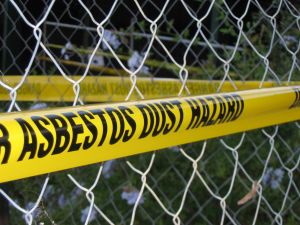
The Environmental Protection Agency has awarded more than $240,000 to schools and government offices in Oklahoma to eradicate asbestos and reduce potential future cases of mesothelioma.asbestosdusthazard.jpg

While our Boston mesothelioma lawyers are encouraged that such measures are being taken elsewhere in the country, we would urge government leaders here in Massachusetts to apply for similar grants.

In fact, it’s been such a major issue in Massachusetts that legislation has been enacted to regulate asbestos monitoring and removal.

All residential, institutional and commercial buildings in the state are subject to the asbestos regulation as laid forth in the Massachusetts Department of Environmental Protection’s code, 310 CMR 7.15. What that legislation says is that all owners or operators (including contractors who work on plumbing, construction, renovation, HVAC, flooring, etc.) are required to determine before any work can be initiated whether asbestos is present and whether it is going to be disturbed during the work.

Common sites of asbestos are the HVAC systems, floor tiles, wallboards, decorative plasters, siding, roofing and fireproofing systems.

Companies that don’t follow the law on this risk not only hefty fines, but also the potential to expose workers and nearby residents to asbestos, which causes a deadly form of cancer called mesothelioma.

So why is it we so often hear about contractors who break the law? In reality, those contractors and building owners are in the minority. Most do want to protect people from harm. But those who skirt these regulations often do it because they can be quite expensive, particularly if asbestos is found and it is likely to be impacted by the work at hand. The DEP recommends having a professional come in to conduct the eradication of asbestos before the other work can begin.That gets pricey.

And of course, that’s why grants like the one recently awarded to Oklahoma are so helpful.

In this case, the funds are expected to be used by the Oklahoma Department of Labor to complete audit inspections of state buildings and schools to determine whether asbestos is present and how best to protect students, employees and visitors from exposure. The money will also be used to ensure that workers who are employed to take out the asbestos are properly accredited and trained.

Oklahoma’s policies with regard to government and school buildings are similar to those in Massachusetts in that they call for “in-place management” of the material. That is, officials must be aware of the presence of asbestos so that they can properly maintain it and reduce potentially harmful exposure. It doesn’t necessarily need to be immediately removed, but it does need to be maintained in such a way that the fibers will not become airborne and therefore pose a risk to those who frequent those structures.

Having this knowledge also allows officials with important information about how to proceed, should they need to initiate a demolition or renovation.

For those who have already been exposed to asbestos, particularly direct exposure for longer periods of time, it is important to seek medical treatment and monitoring so that if you do develop mesothelioma, it can be detected early for boosting chances for a longer life.

Additionally, contacting a Boston mesothelioma attorney can help you explore your options with regard to financial compensation for negligent asbestos exposure.
Continue reading

Costs for medical treatments for cancer are expected to skyrocket in the next eight years, according to a recent study in The American Journal of Managed Care. stethascopeimage.jpg

In particular, medical treatments for rare, more aggressive types of cancer, such as mesothelioma, are expected to accelerate at a fast clip.

Our Boston mesothelioma lawyers know that this makes it all the more critical for our clients to obtain results in their litigation efforts. Although mesothelioma is a fatal disease, medications and treatments to prolong life and enhance the quality are extremely expensive. As it is, they can practically bankrupt a family, even if the individual does have health insurance.

What’s more, those who suffer from mesothelioma may be younger than your average cancer patient. As they have not yet reached retirement age, they and their families are often not financially prepared when the person diagnosed must stop working.

One piece of good news is that the Social Security Administration, which doles out government support for those suffering from serious, long-term disabilities and illnesses, has added peritoneal mesothelioma to its list of compassionate allowances. It is among one of the select few illnesses in which a diagnosis allows a person to fast-track their disability claim, so that they may receive benefits sooner. (In other cases, the process of application is more rigorous and time-intensive.)

Still, these benefits will help in covering day-to-day expenses, but they usually aren’t nearly enough to cover medical costs. Even when a person receives Medicare, the medical bills are typically so astronomical that the costs aren’t covered.

A person who has been diagnosed with mesothelioma has almost always, at some point, been exposed to airborne asbestos fibers. Many, many companies used this material because it was cheap and effective, despite knowing the risks it posed to workers and consumers. This is why, in addition to seeking out medical treatment in the early stages, it’s critical to meet with a mesothelioma lawyer who is experienced in obtaining financial compensation for clients from those responsible for the exposure.

This new study just further underscores the importance.

Conducted by researchers at RTI International and the Centers for Disease Control and Prevention, the study indicates that cancer treatment costs are going to see a major increase in the next several years. The lowest increase is expected in Washington D.C., where costs will rise by about 35 percent, while the highest increase is expected in Arizona, where costs are expected to climb by an eye-popping 115 percent. In some cases, individual state costs for cancer treatments are expected to top $28 billion more a year.

Those conducting the study used a comprehensive method to predict these increases. They analyzed data from the U.S. Census Bureau population forecasts, as well as information from the 2004 to 2008 Medical Expenditure Panel Survey. From there, they made predictions on how many people in each state are likely to require some form of cancer treatment in 2020, and predicted what the average cost of that treatment is likely to be.

Even in those areas where cancer rates overall were expected to decline, costs still increased sharply. This was even when inflation costs were adjusted. Overall, costs are expected to jump by nearly 4 percent each year.
Continue reading

The recent mesothelioma deaths of two former employees who worked in the same building at a California college is raising alarm among both faculty and students regarding air quality and the possibility of asbestos contamination. universitycampus.jpg

Our Boston mesothelioma lawyers continue to see these case occurring at schools, universities and educational facilities — in this case it’s reportedly taken the lives of two employees already and may ultimately be responsible for future cases of mesothelioma.

Asbestos is known to cause mesothelioma when the fibers are disturbed, become airborne and are subsequently inhaled. Mesothelioma, a rare, deadly form of cancer, develops years – usually decades – after exposure. Despite the arguments made by countless manufacturers and construction companies challenged in court, no amount of asbestos is safe, and a single exposure has the potential to be fatal.

According to local media reports. a 51-year-old administrative coordinator at Chico University’s political science department died in mid-September due to complications from lung cancer. Just a few months earlier, a 49-year-old sociology professor passed away after being diagnosed with mesothelioma. Both employees had worked in the same building at the university, one just a floor above the other in the northwest corner of the facility.

Following the death of the second employee, an e-mail was distributed by one of the deans to other faculty members, saying there were concerns about the quality of the air in this particular building. That e-mail indicated that there was knowledge that the iron beams in the structure had been spray-coated with asbestos, which is in the fiber glass. The e-mail went on to say that if left alone, these fibers would not have been harmful. But there was concern that over the years, work to the heating, ventilation and air conditioning could have disturbed those fibers.

Hours after that e-mail went out, a meeting was held with the school’s Academic Affairs office, as well as the Department of Environmental Health & Safety. It’s not clear what information came out of that meeting, but another has been scheduled for this month.

A statement released by campus officials said that hundreds of thousands of structures built in the 20th century were constructed with asbestos or asbestos materials. School officials assured that no construction had taken place at the building recently that would have disturbed those fibers. However, as mentioned previously, a mesothelioma diagnosis wouldn’t have been made until several years after exposure. So if it was indeed exposure to asbestos at the school that made these workers sick, recent construction or renovation work wouldn’t have mattered. It would likely have occurred several years prior.

A state oversight agency that monitors asbestos in schools, government buildings and commercial structures indicates that nearly 50 buildings on that campus alone contain asbestos. Similar situations have been reported in schools and companies throughout Boston as well, where many structures were build in the era when asbestos was a commonly-used construction material.

For this reason, when someone is diagnosed with mesothelioma, determining the source of exposure can be tricky. But it is important to narrow it down so that you and your loved ones may receive compensation. We can help.
Continue reading

A diagnosis of mesothelioma can leave you shocked, devastated and reeling with questions. question.jpg

Our Boston mesothelioma lawyers know that as much as you don’t want to spend your latter years embroiled in a legal battle, you also want to ensure that your loved ones are going to be financially comfortable when you’re gone.

This is where we can help. We are committed to making the process as painless as possible, and to fighting aggressively to get you the compensation you deserve. We want you to understand what you can expect when you file a mesothelioma lawsuit.

First, if you’ve been diagnosed, you probably already understand what causes mesothelioma: exposure to asbestos. Into the 1970s and even the 1980s, it was a pretty widely used material that was used in a multitude of products and construction projects. Manufacturers liked it because it was cheap and it had a high resistance to heat. Those who worked in manufacturing, shipping, the auto industry and mining – as well as their families – are at particular risk of developing the disease, which doesn’t manifest itself until decades after exposure.

The real outrage of these cases is that companies were well aware of the dangers of using asbestos, and continued to use it anyway, mostly because it was inexpensive. This is why so many people are now seeking legal compensation. These are businesses that knew or should have known the risk to which they were exposing workers and consumers.

So one of the first steps after you receive a diagnosis is to identify the culprit(s). In many cases, given the prevalence of the material in a wide range of products and industries, there is usually more than one named defendant. Still, every case is different, so it just depends.

It’s difficult to say an exact timeline for your case because it all depends on how hard the company or companies fight back, as well as the kind of compensation you are seeking.

If you are awarded compensation, it will happen one of three ways:

1. A verdict. This would happen as the result of a trial. A jury will decide whether the defendants in the case are liable for your exposure, and therefore your disease. From there, the jury would decide the size of your award, which is likely to include both compensatory and punitive damages. This just means that the jury is not only compensating you for pain and suffering, they are punishing the defendant.

2. A settlement. This is how the majority of mesothelioma cases end. Most companies realize they may not have much legal standing to fight the allegations, and therefore will work to negotiate a settlement agreement. This amount may be less than what you would get from a trial, but it will be less arduous and time-consuming for you and your family. Of course, if a settlement is offered, it is always your choice whether to accept it or whether to press forward with a trial.

3. A bankruptcy trust. In the wake of many mesothelioma claims, a number of companies filed for bankruptcy. Some were not able to stay in business. The bankruptcy courts declared that those companies would have to set aside trusts in order to pay out current and future mesothelioma claimants. If you, with the help of your attorney, can prove that your exposure to asbestos was caused by one of these companies, you may be entitled to a pay-out from one or more of these trusts.
Continue reading

Officials in Framingham are embroiled in an environmental debacle involving alleged illegal dumping, an apparently dishonest contractor and a family that is stuck with a pile of asbestos in their back yard and a $900,000 bill to remove it. leftorright.jpg

Boston mesothelioma attorneys understand that the city has filed suit against the contractor, while the Department of Environmental Protection is billing the family, which is debating legal action against the city.

Quite frankly: It’s a mess.

And the fact of the matter is, the asbestos sitting in a heap of soil at the edge of the Milford property creates a potential health hazard, as asbestos that is disturbed puts everyone nearby at risk for developing mesothelioma – a slow-developing but deadly cancer of the internal organs, caused by asbestos exposure.

Those who are now battling mesothelioma were on average exposed 30 to 40 years ago, with the disease not manifesting itself until much later. Despite all our advances in education, advocacy and litigation, cases like this sadly ensure people may be getting sick for many more years to come.

Here’s what we know of this case, as reported by local media:

Noisy, late-night dumping two summers ago drew the ire of neighbors in the area. Curious, one night they ended up following the trucks back to the New York Avenue in the Framingham Technology Park. They snapped a few photographs of the scene, and contacted the DEP.

The DEP, in turn, secured a warrant and found that within the debris pile on the family’s property were pipes containing asbestos.

The company that had been dumping the fill, SB General Contracting, was reportedly employed by the town, having been hired to replace water pipes and the old concrete sewer system.

The DEP issued a $900,000 bill to the family to clean up the debris. Although there is no indication they allowed the trucks on their property, the DEP contends that they are responsible as it is now on their land.

The Rowe’s then wrote to the town, demanding that they take action to properly remove the material. Also, the DEP is looking into whether town officials may have violated the Solid Waste Management Act, as well as the Clean Air Act.

In turn, Framingham officials have filed suit against the contractor, claiming they are responsible for the clean-up effort, and are suing the company for about $950,000. They say taxpayers shouldn’t have to be on the hook for what happened, and this amount should cover removal expenses plus attorney fees.

But the contractor, meanwhile, says the city wouldn’t pay them when crews ran into trouble with underground rock and other impediments to the project. They say both sides had reached a $162,000 settlement that would have allowed them to properly complete the work, but the town never paid up.

While all of this is being sorted out, the DEP has issued an order to cover up the pile with plastic.
Continue reading

A 40-year study that downplays the health effects of asbestos exposure for miners and mill workers has drawn the ire of several mesothelioma advocacy groups. asbestoswall.jpg

Our Boston mesothelioma attorneys know that a hallmark of solid science is objectivity. This particular study, conducted by Dr. John Corbett McDonald of the McGill University’s School of Occupational Health, based in Canada, has been criticized for lacking transparency and for being biased toward the industry.

It is a fact that the Chrysolite Institute, which is a lobbying group established to promote the use of asbestos in overseas products, uses the 40-year McGill study to bolster its claims of asbestos safety.

But why would a reputable scientist risk that reputation in order to show the asbestos industry in a favorable light?

According to an investigation by CBC News, it all boils down to money.

Back in the 1960s, the dangers of asbestos were becoming more widely known and understood. The industry, however, didn’t want to risk government regulation. That would have meant huge profit losses and lawsuits (which later ended up happening anyway, but they were trying to avoid it at the time).

So it took its cues from the tobacco industry, with the overarching view that industry is always best suited to look after its own issues. (Of course, as we now see clearly, that’s not true when it comes to preserving public health; industry is out for industry.)

Just look at the tobacco industry. There were in fact many scientists on big tobacco’s payroll who attested to the fact that cigarettes were simply a healthy stress-reliever – an account we now see as so blatantly false as to be laughable, if the consequences of those lies weren’t so devastating.

But in this vein, it hired a scientist to begin research on the issue.

Who did they hire?

According to CBC, it was none other than Dr John Corbett McDonald of McGill.

The news station produced documents showing that McDonald and other researchers at the school accepted checks form the Quebec Asbestos Mining Association between 1966 to 1972, for amounts that today would translate into several million dollars.

The results of the McGill study seem to indicate it was exposure to another chemical, tremolite, that caused mesothelioma more frequently than did the asbestos.

McGill researchers reportedly refused to give the raw data to CBC reporters, but said it would be conducting an internal investigation regarding the integrity of the results. That investigation is ongoing.

Now, without seeing the raw results of this study ourselves, it’s hard to make a conclusion one way or the other about whether the study was flawed. However, there is a great appearance of impropriety, whether or not the research itself remained untainted.

What we do know is this: The World Health Organization has concluded that all types of asbestos cause lung cancer, mesothelioma and asbestosis, and further that there is absolutely no safe level of exposure.

While the substance has been widely shunned by U.S. manufacturers since the 1970s, people continue to learn they have been sickened by mesothelioma, as the disease has an extremely long latency period. People who have been exposed to the airborne asbestos toxins don’t learn until decades later that they are ill.
Continue reading

Our Boston mesothelioma lawyers realize that asbestos litigation is a commitment. washingtonmonument1.jpg

It’s rarely a swift process, despite the fact that the courts do realize that those who have been diagnosed with mesothelioma are working with borrowed time.

But for those who struggle with lung cancer, asbestosis or mesothelioma, it’s not always about the money. It’s about justice and holding agencies accountable for negligence.

Such was the case with 10 Architect of the Capitol employees, federal government workers charged with the construction and preservation of our nation’s iconic monuments. These are structures such as the U.S. Capitol Building, the Senate Office Buildings, the House Office Buildings, the U.S. Supreme Court, the Capitol Visitor Center, the Library of Congress, the Capitol Grounds and the U.S. Botanic Garden.

These workers alleged that back in 2000, health and safety hazards were first discovered in the miles-long underground utility system that runs beneath Capitol Hill. These are the underground pipes and tunnels that are used to provide steam and chilled water to the federal facilities.

Some of those hazards included excessive heat, falling concrete – and asbestos.

Lab tests indeed determined that certain AOC workers were exposed to “extremely high” levels of asbestos.

There was even testimony on Capitol Hill that Congress hadn’t done enough to protect workers.

The workers who blew the whistle on those dangers suffered harassment and retaliation for speaking out. They later received an undisclosed settlement.

That agreement, between the federal Office of Compliance (OOC) and the AOC, stipulated that repairs to the tunnels would be completed within the next five years – with full abatement completed by June of 2012.

Congressional officials several times lamented that there wasn’t enough money to complete all of the work. Of course, if the alternative meant Congressional members would have to suffer no steam or chilled water to their facilities, certainly, they might have been persuaded to fix the problems sooner.

And in fact, the AOC did spend $173 million million to cover the repairs, and declared its obligation had been satisfied. Both agencies applauded one another for the completion of the work.

But the fact of the matter is, it took years for the agency to step up and take action, even after they knew the dangers to which they were exposing their workers.

A former supervisor at the AOC who now suffers lung diseases as a result of his exposure to asbestos, said it angers him to hear the agencies pat one another on the back.

The announcement, he says, is nothing but paperwork. His illness is something he lives with each day.

“After 15 years of ignoring health issues,” he told a Roll Call reporter, “You don’t settle with anybody.”
Continue reading

Contact Information